
Understanding how Japanese businesses make decisions is critical for SaaS teams entering this market. Unlike the fast, individual-driven decision-making style in the U.S., Japan follows a slower, consensus-based process that emphasizes harmony and thorough internal alignment. Misinterpreting these methods as delays can harm relationships and derail opportunities. Here’s what you need to know:
- Consensus First: Decisions are built through informal groundwork (nemawashi) before formal approval (ringi). This process ensures alignment across departments and minimizes resistance during implementation.
- Structured Proposals: The ringisho, a written proposal, circulates for review and approval across multiple levels, often taking months. Supporting materials like ROI analyses and risk assessments are essential.
- Longer Timelines: Sales cycles typically last 6–12 months, with 2–4 months dedicated to the ringi process. Patience and relationship-building are key.
- Team Collaboration: Success requires cross-functional teamwork, localized resources, and bilingual communication to meet the expectations of Japanese clients.
- Post-Decision Focus: Strong feedback loops and Quarterly Business Reviews (QBRs) help reinforce trust and long-term partnerships.
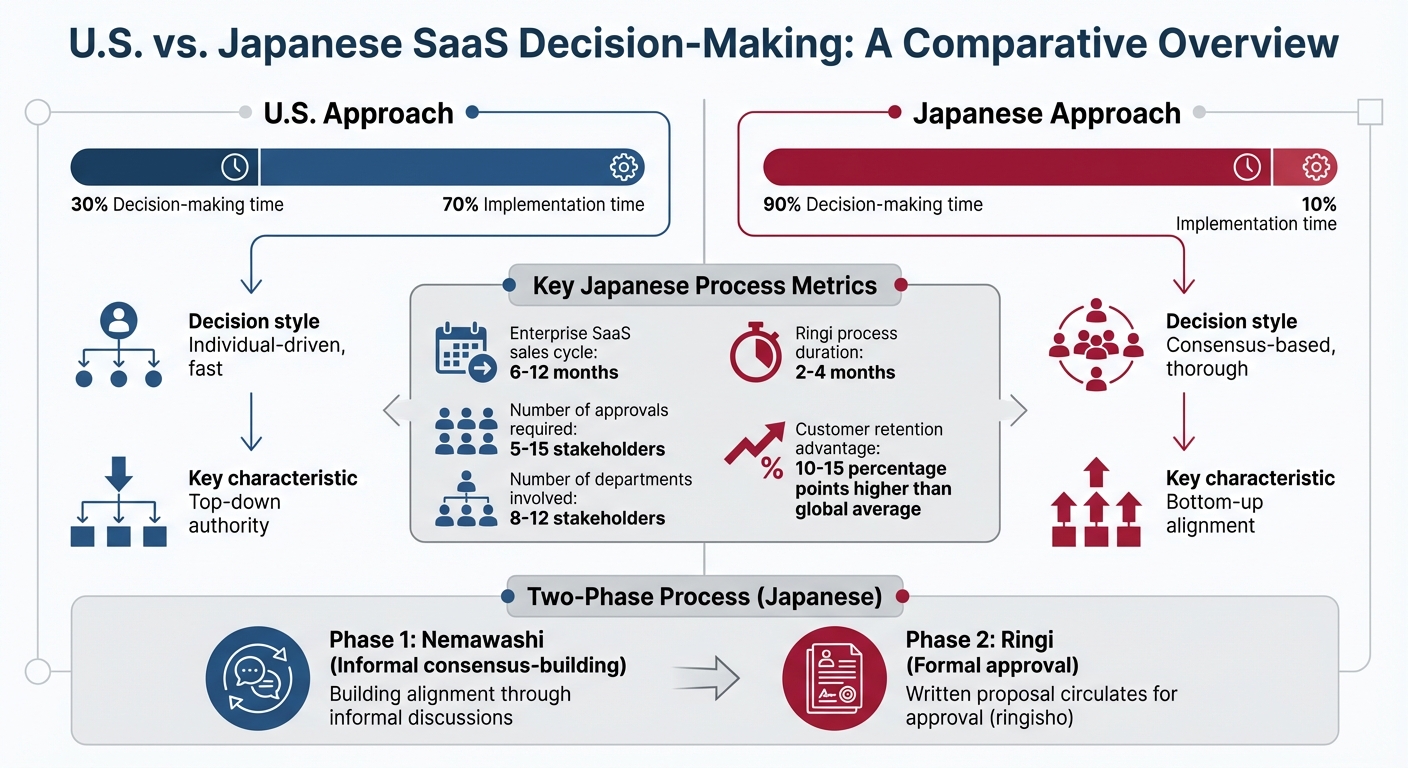
U.S. vs Japan SaaS Decision-Making: Timeline and Process Comparison
Understanding Ringi: Japan’s Consensus-Building System
The Ringi system is a structured approach to decision-making in Japan, built around consensus. At its core is the ringisho – a written proposal that passes through multiple organizational layers for approval. The term Ringi translates to "request for decision", and it formalizes agreements reached during the informal nemawashi phase. A ringisho typically includes details such as the problem, proposed solution, vendor evaluations, cost breakdowns, timelines, and risk assessments.
"Ringi is Japan’s formal consensus-based decision-making process in which a written proposal circulates through multiple levels of organizational hierarchy for review and approval." – Nihonium
How the Ringi Process Works
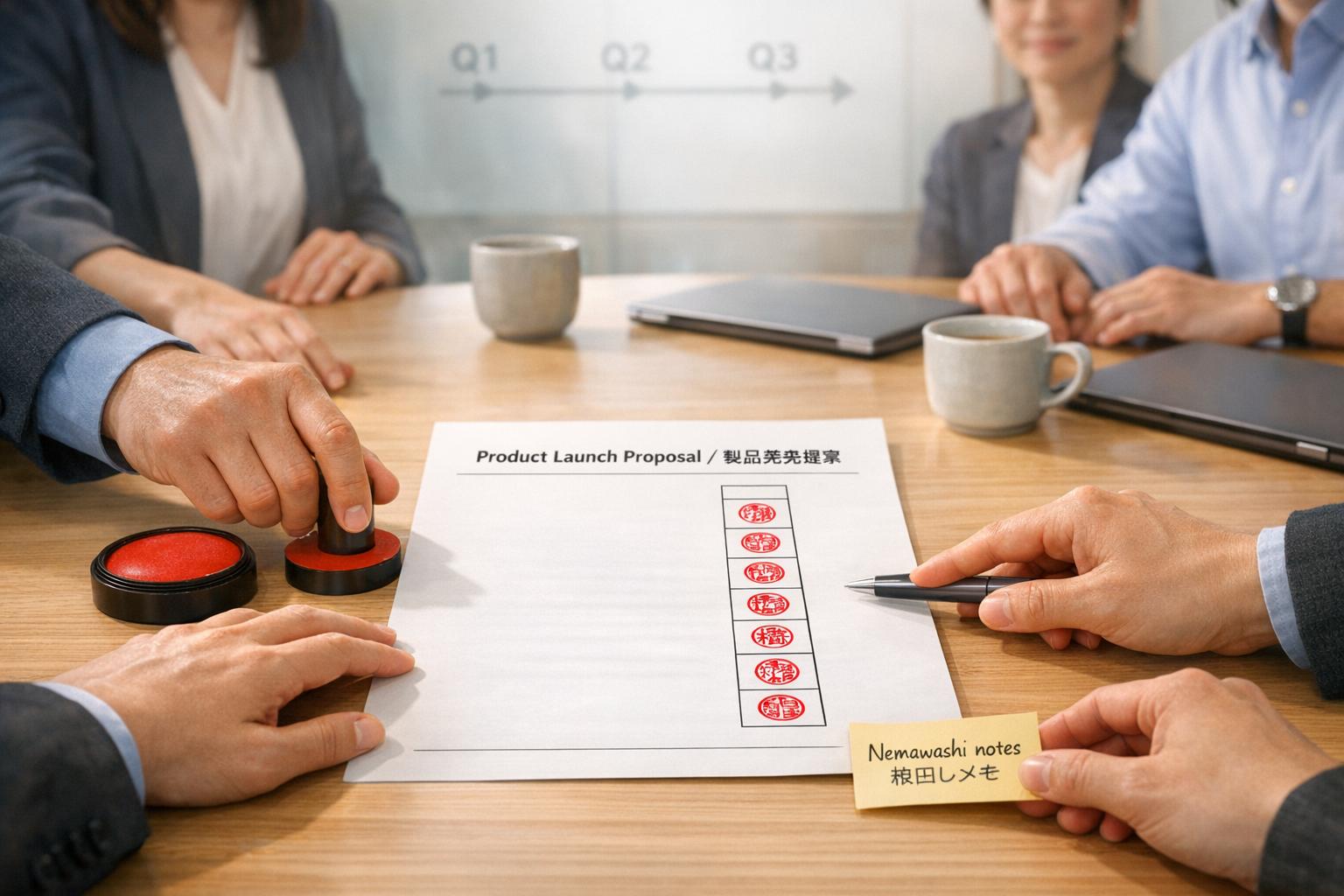
Once a ringisho is prepared, it circulates through various departments – like IT, legal, finance, and security – and climbs through multiple levels of management. Each reviewer gives their approval by stamping the document with their hanko (personal seal). For something like a SaaS purchase, this process can involve 5–15 approvals, with each step taking 1–2 weeks. This means the circulation phase alone can stretch to 2–4 months. If objections arise during this stage, it signals that the nemawashi groundwork wasn’t thorough enough, as unresolved concerns should have been addressed earlier.
Why SaaS Teams Need to Understand Ringi
For SaaS companies, grasping the Ringi system is crucial because it directly affects sales timelines and customer engagement. Enterprise B2B SaaS sales cycles in Japan typically last between 6–12 months, with the Ringi process consuming 2–4 months of that time. Deals often require input from 8–12 stakeholders across different departments, even if there’s a single internal advocate pushing for the purchase.
The effort pays off, though. Japan’s customer retention rates often surpass global averages by 10–15 percentage points. This is because the Ringi process secures genuine organizational buy-in, leading to smoother implementations and reduced churn. SaaS teams can support their internal champions by providing detailed, data-driven Japanese-language materials, such as ROI analyses, security certifications, and risk management strategies. These resources help champions craft strong ringisho proposals, speeding up the decision-making process.
Understanding Ringi also opens the door to leveraging nemawashi, ensuring alignment before formal decisions are made.
sbb-itb-a752276
Implementing Nemawashi: Pre-Decision Alignment
What is Nemawashi?
Nemawashi, which translates to "turning the roots", is a concept rooted in Japanese culture that emphasizes groundwork – much like preparing a tree for transplanting by tending to its roots beforehand. In the business context, it refers to the informal, behind-the-scenes process of building consensus with stakeholders before drafting a formal proposal.
This method is central to Japanese decision-making, with approximately 90% of the process focused on alignment and only 10% dedicated to implementation. By contrast, U.S. business practices typically allocate about 30% of the time to decision-making and 70% to implementation. For SaaS teams working in Japan, formal meetings often serve as a final confirmation of decisions already shaped through Nemawashi discussions. This cultural nuance is key to understanding how to effectively adapt localization strategies in this setting.
"Nemawashi is not about agreement, it’s about alignment, and agreeing on disagreements respectfully." – Réda Guiri, Head of Group Outsourcing & Procurement, Toyota Insurance Services Europe
How SaaS Teams Can Use Nemawashi
SaaS teams can incorporate Nemawashi principles by focusing on relationship-building and preemptive alignment. Start by mapping out all relevant stakeholders – this includes decision-makers as well as team members in HR, marketing, distribution, and engineering who will be impacted by the proposed solution. Engage these stakeholders through informal one-on-one or small group discussions. Frame your SaaS solution as a work in progress, using language like, "I’m exploring an idea and would value your input." This approach reduces pressure for immediate commitment and fosters open dialogue.
Adopt a "catchball" technique, where ideas are passed back and forth across all levels of the organization. This ensures that everyone has a chance to contribute, helping refine the proposal collaboratively. Pay close attention to feedback during these early conversations, and use it to improve your proposal. Gradually expand discussions, starting with peers, then managers, and finally department heads. For remote teams, leverage instant messaging and short video calls to pick up on non-verbal cues that might otherwise be missed.
"Once you have the final decision, then you can be confident that that decision truly is final… There’s no re-decision meeting. No debating and disagreeing after the fact." – Réda Guiri, Head of Group Outsourcing & Procurement, Toyota Insurance Services Europe
While Nemawashi may feel slow at first, it creates a solid foundation by addressing concerns early and building consensus. This thorough groundwork enables quicker, more efficient execution once decisions are finalized. For SaaS teams, investing in this phase not only streamlines formal approval processes but also strengthens long-term partnerships, aligning efforts with the values of Japanese business culture.
Adapting SaaS Team Structures for Bottom-Up Decision-Making
In Japan, businesses rely on a bottom-up decision-making approach that requires a different strategy compared to Western markets. Instead of a single executive making the final call, Japanese companies follow the Ringi system. This process involves proposals moving through various departments and hierarchical levels, often requiring 5–15 approvals for significant SaaS purchases. To succeed in this environment, SaaS teams must adapt by focusing on cross-functional collaboration from the very beginning. This means shifting away from targeting a single decision-maker and instead engaging multiple departments simultaneously.
Sales teams can’t work in silos – they need to collaborate closely with customer success, technical experts, and legal teams to prepare the kind of detailed documentation Japanese buyers expect. This includes everything from ROI calculations and technical architecture diagrams to security certifications and risk mitigation plans. Seamless teamwork across departments is critical to navigating Japan’s consensus-driven decision-making process.
Promoting Cross-Functional Collaboration
Adjusting workflows to prioritize localized documentation over product demos is another key step. Japanese buyers often prefer to download materials for internal review. As a result, sales and marketing teams must collaborate to create tailored, Japanese-language resources early in the process. Among these materials, case studies are particularly important – they are requested more often than even company introduction decks. To meet this demand, customer success teams need to develop case studies in Japanese that highlight specific business outcomes and address risk concerns.
Another effective strategy is adopting a hybrid sales model. This involves combining direct sales for major accounts with indirect channels for small and medium-sized enterprises (SMEs). Direct sales allow for greater control over the customer experience but require significant investment in local talent. On the other hand, leveraging indirect channels can help grow your pipeline faster by tapping into established networks. To make this dual approach work, your team structure should include clear protocols for handing off responsibilities between internal sales teams and partner organizations.
"Decision-making inside Japanese companies typically involves a formal internal proposal, multiple stakeholder meetings, and a consensus-based approval process." – Yuga Koda, Nihonium
Maintaining Clear Communication Channels
Restructuring teams isn’t enough – clear and consistent communication is just as important. Establish bilingual communication channels between your global headquarters and local Japanese teams to ensure that feedback flows smoothly. Cross-cultural workshops can help HQ staff understand the unique challenges of the Japanese market, while local teams can relay client feedback effectively to product and engineering teams.
Using CRM platforms with Japanese language support is another way to manage the complexity of multi-stakeholder interactions. These tools can help standardize protocols and keep track of intricate sales processes. Additionally, adjust your KPIs to reflect the realities of the Japanese market. Instead of focusing on short-term closing rates, emphasize metrics like meetings booked, pipeline velocity, and stakeholder engagement. Given that enterprise SaaS sales cycles in Japan often last 6 to 12 months – and can stretch beyond 18 months for complex deals – team incentives and compensation plans should reward the patient, relationship-driven work that leads to success.
Balancing Group Harmony with Individual Sales Accountability
In Japan, SaaS companies need to strike a delicate balance between fostering a collaborative team environment and maintaining individual accountability. The cultural emphasis on wa (group harmony) often contrasts with Western sales models that focus heavily on individual achievement. While teamwork is paramount in Japanese business culture, each team member’s reliability plays a key role in building and maintaining client trust.
Respecting Japanese Team Dynamics
Compensation models should align with Japanese labor laws and cultural expectations. For example, instead of relying on a 100% commission-based structure, consider a 60% base salary and 40% commission split. This approach provides the financial stability that Japanese professionals value while still incentivizing performance.
When addressing underperformance, it’s important to handle it discreetly to preserve the individual’s dignity. Techniques like the sandwich method – starting with positive feedback, followed by constructive criticism, and ending with encouragement – can be particularly effective. This approach helps maintain harmony while addressing performance issues.
"In Japan we don’t say, ‘You’re fired.’ If someone is not doing a good job, we put him near the window, let them do paperwork. Those people we call madogiwazoku." – @papafromjapan, Japanese Influencer
By prioritizing mutual respect and understanding these cultural nuances, you can create a foundation where individual accountability complements team cohesion.
Aligning Sales Targets with Team Objectives
Key performance indicators (KPIs) should reflect the long-term nature of Japanese enterprise sales. Metrics like client satisfaction, renewal rates, and seamless onboarding are more aligned with the relationship-driven approach of Japanese businesses. Since building trust and maintaining relationships often take time, your incentive structure should reward patience and sustained effort.
A team-sell approach works particularly well in Japan. By having sales development representatives, account executives, and customer success managers collaborate as a unified team, you can align with the collective decision-making process that many Japanese clients prefer. This strategy not only mirrors local business practices but also enhances the overall client experience.
Using Post-Decision Feedback to Build Long-Term Relationships
In Japan, the period after a decision is made is just as important as the decision itself. This phase is where trust is solidified and partnerships are nurtured for the long haul. By focusing on post-decision feedback, SaaS teams can show their dedication to ongoing improvement while reinforcing the trust that Japanese clients highly value.
Running Team Reviews After Key Decisions
After major decisions, it’s essential to hold internal reviews that reflect the principles of nemawashi (informal consensus-building). Sharing feedback internally before it becomes public can help avoid potential issues down the line. This method respects wa (group harmony) by celebrating shared accomplishments and downplaying direct criticism, which helps maintain a collaborative atmosphere.
These reviews should include input from all levels of your organization, blending insights from frontline employees with leadership perspectives. A skilled facilitator can guide these discussions, focusing on finding areas for improvement rather than placing blame. By fostering a culture of constructive dialogue, these internal reviews can strengthen your approach to client feedback and build more resilient partnerships.
Building Client Trust Through Feedback Loops
Once internal alignment is achieved, the next step is to establish strong feedback loops with clients. Japanese businesses place high value on Quarterly Business Reviews (QBRs) that bring together senior executives and operational teams. These sessions not only reinforce the value SaaS solutions provide but also collect the insights clients need for their internal Ringi processes, which are critical for decisions like renewals or expansions. SaaS companies aiming for success in Japan often strive for a Net Revenue Retention (NRR) of 120 or more and a Gross Revenue Retention (GRR) exceeding 95% – figures that highlight the importance of maintaining strong feedback channels.
When gathering client feedback, be sure to allow ample time, as internal consensus-building in Japan can take weeks or even months. Use indirect methods to frame feedback, aligning with the local preference for risk-averse and consensus-driven communication styles. Pay attention to subtle cues like document access rates and the adoption of Japan-specific features, as Japanese clients often rely on written manuals instead of direct feedback. And don’t forget to use proper keigo (formal Japanese language) in all communications to maintain professionalism and respect.
Conclusion
To successfully reshape your go-to-market strategy for Japan, you’ll need to rethink how your team operates and makes decisions. The Japanese SaaS market places a strong emphasis on trust and credibility, which can be cultivated through practices like ringi and nemawashi – key elements in navigating business relationships and decision-making processes.
With the market projected to hit $20.86 billion by 2029, growing at an impressive 19.31% annual rate, entering Japan’s SaaS industry demands more than just localization. It requires structured feedback systems and a willingness to adapt to longer decision cycles. These timelines can range from a few weeks for modern IT companies to several months for more traditional enterprises.
As highlighted earlier, aligning your team structure with the hierarchy within Japanese companies is crucial. Decision-making power often lies with the buchō (department general managers) and senmu/jōmu (senior or executive directors) rather than the president. Since 70–90% of decisions are essentially made before formal meetings even occur, building relationships with these key influencers early in the process is essential.
"Localization is critical in Japan’s relationship-driven market, and taking the proper time to adapt your strategies and services will yield long-lasting results." – Custom Media
To move forward, focus on cultivating bicultural expertise, fostering strong internal collaboration, and creating efficient feedback loops. Companies that successfully align with Japan’s unique cultural and business practices don’t just enter the market – they form enduring partnerships that support long-term growth in one of the world’s most sophisticated SaaS landscapes.
FAQs
How do I identify all stakeholders in a Japanese Ringi approval?
To ensure a smooth Ringi approval process, start by mapping out all the departments and individuals who will be impacted by the decision. These stakeholders play a crucial role in shaping and approving the proposal.
Once you’ve identified them, circulate the Ringi-sho document to gather their input and secure their approval. Keep in mind that this process often involves multiple layers of review to ensure every relevant perspective is taken into account. This thorough approach is key to building consensus across teams and departments.
What should I include in a Japan-ready ringisho for SaaS?
To succeed in Japan’s SaaS market, your ringisho (a formal proposal document) needs to align with the country’s unique decision-making process. Japanese business culture places a heavy emphasis on consensus-building and involving all stakeholders. Here’s what you should focus on:
- Clear Value Propositions: Clearly outline the benefits and advantages of your SaaS offering. Make it easy for stakeholders to see how your solution addresses their specific needs.
- Thorough Documentation: Include detailed materials like case studies, ROI analyses, and performance metrics. These help build credibility and support informed decision-making.
- Understanding the Ringi System: Familiarize yourself with the Ringi process, where proposals are reviewed and approved step-by-step by multiple stakeholders.
Be prepared for informal consensus-building activities, such as nemawashi (laying the groundwork), which are crucial for smoother approvals. This involves gathering input and support from key individuals before the formal proposal is even submitted.
By focusing on clarity, respect for cultural nuances, and fostering collaboration, your ringisho will be better positioned to navigate Japan’s decision-making landscape effectively.
How can I forecast revenue with 6–12 month Japan sales cycles?
To predict revenue within Japan’s 6–12 month sales cycles, it’s crucial to consider the extended timelines and the emphasis on building strong relationships. The sales process in Japan typically involves numerous trust-building meetings before any decisions are finalized.
Break down your forecasts into clear stages, such as initial contact, proposal, and final approval. Rely on historical data or results from pilot projects to estimate outcomes, but be prepared to account for possible delays. Maintaining a detailed pipeline and ensuring regular communication can help refine your accuracy over time.
 English
  Japanese