
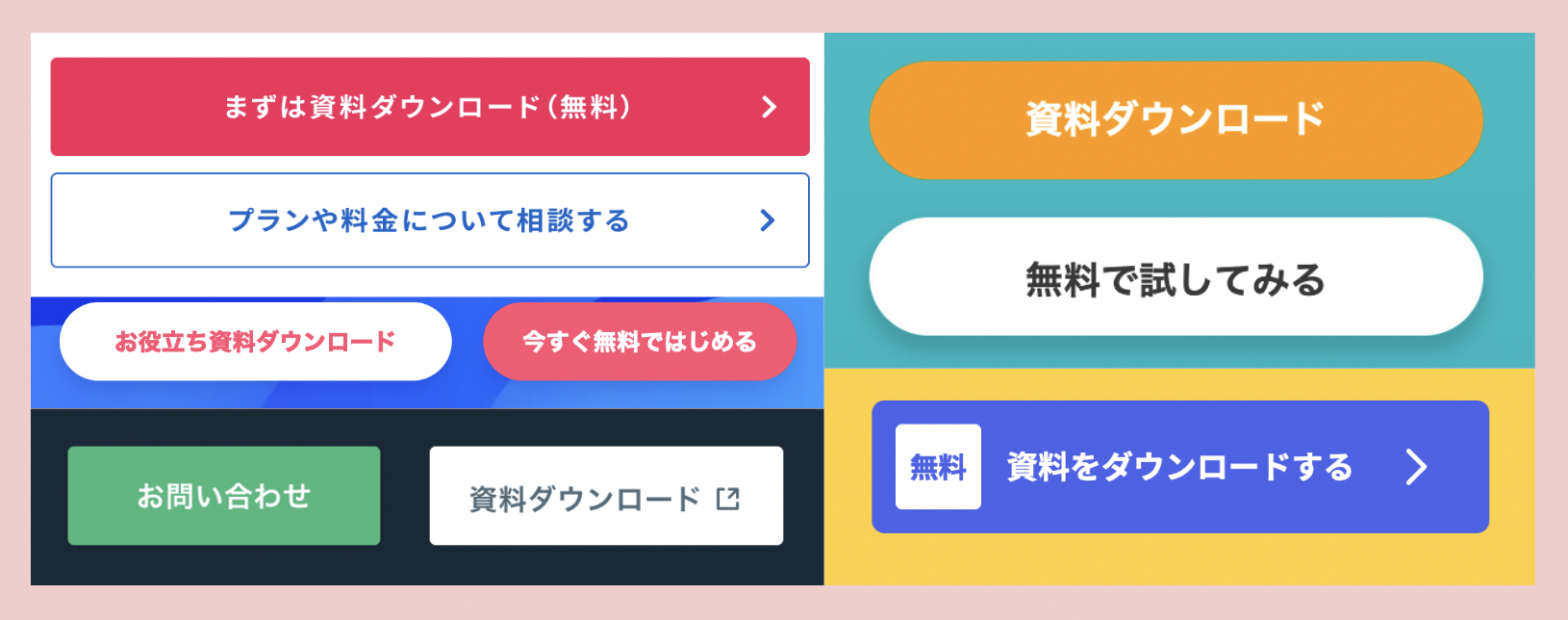
Japan’s Unique Call To Action: “Download Documents”
Landing pages in Japan have similarities with global landing pages, but parts of the landing pages are unique to Japan. There’s one CTA (call-to-action) that is unique to Japan.
Calls to action vary based on who you’re targeting and the desired behavior you want the visitor to take. Depending on the product and end-user, pushing for a free trial or a call may make sense. The B2B SaaS sales strategy also evolves with the maturity of the company and the target audience.
While call/demo bookings have become a global standard for B2B software, Japan seems to love the “Download/Request Documents” call to action. This CTA seems to be very unique to Japan (I don’t think I’ve seen this CTA outside of Japan). This CTA is a reflection of the business culture in Japan. Decision-making in Japan is highly consensual, meaning that decisions are made as a group. The decision-makers and stakeholders are not always the end-users, so they may not get the context they need through using the product. This is where the document comes in handy. The document being downloaded is a company introduction deck that goes over the company itself, as well as the product. This deck is important, as it’ll be the first and main impression for the decision-makers and stakeholders. This document will also be used for the Ringi process, Japan’s unique decision-making process. It is extremely important for the deck to be properly created and curated for the Japanese audience.
Many solutions in Japan will have two CTAs, one of them almost always being “Download/Request Documents.” Here’s a quick look at a few Japanese companies’ CTAs and their global comps (you can see how they compare in revenue here):
SmartHR, one of Japan’s unicorns, is a cloud-based HR solution.
|シェアNo.1のクラウド人事労務ソフト-2024-03-01-at-1.51.15-PM.jpg)
The two CTAs on SmartHR’s homepage are “Download Documents” and “Try for Free”. Taking a look at Rippling, their CTA is “See Rippling.”

If you click through, it takes you to a demo booking page. Other HR platforms have a similar flow of getting people to book a call.
Taking a look at another company, Sales Marker, an AI-driven sales enablement platform, the two CTAs are “Request a demo” and “Download Document.”

On the other hand, Outreach has two CTAs:
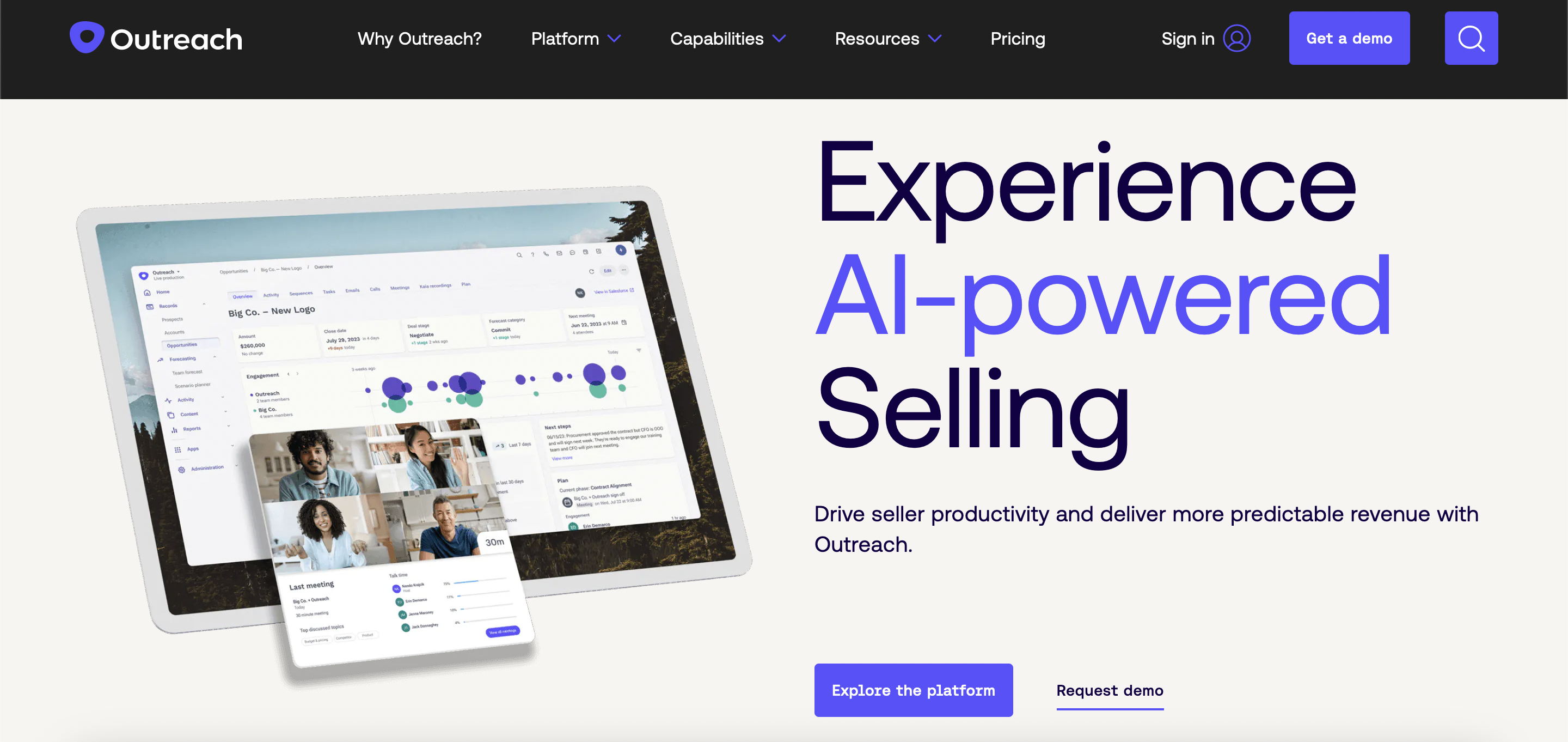
Funnily enough, the “Explore the platform” CTA takes you to a demo booking page, so they essentially have two of the same CTAs.
One last example is Wovn, a localization and translation platform out of Japan. Their English page only has “Contact Us” while their Japanese page has both “Contact Us” and “Download Document.”

It’s interesting that the same solution has an additional CTA tailored to the Japanese market and sales process.
Why “Download Documents”?
While B2B platforms are standardizing call bookings as their CTA, Japanese companies are pushing visitors to download their company deck. This is likely a reflection of differences in culture and the sales process. What we’ve seen is the following:
1. Japanese buyers don’t want to talk to a sales rep until they have a concrete idea of the service. They want to go into the demo having a decent idea of the product they’re being sold.
2. A deck is easy to share internally for their review/purchasing process (Ringisho Process). Japanese buyers usually have to get layers of approvals. Sharing a deck helps out with internal communication. This deck is extremely important, as it’s the first thing that many of the decision makers see. The level of importance cannot be understated and there are courses dedicated to getting this right.
3. Sometimes a company introduction is a mandatory part of the internal review/purchasing process (Ringi Process).
Conclusion
The Japanese sales process is nuanced and different. The CTAs are a reflection of the unique process — As the global market is standardizing on demo/call bookings, the downloading/requesting documents is the common CTA in Japan.
Instead of pushing visitors to download documents, global companies that have entered Japan seem to match the Japanese CTAs to their global practices (SalesForce, Figma, Deel, etc.). Nonetheless, it’s important to have a localized deck that can be circulated as part of the typical Japanese internal approval and purchasing process. Nihonium can help SaaS companies navigate through these nuances unique to Japan (book a free consultation here).
 Japanese
  English