
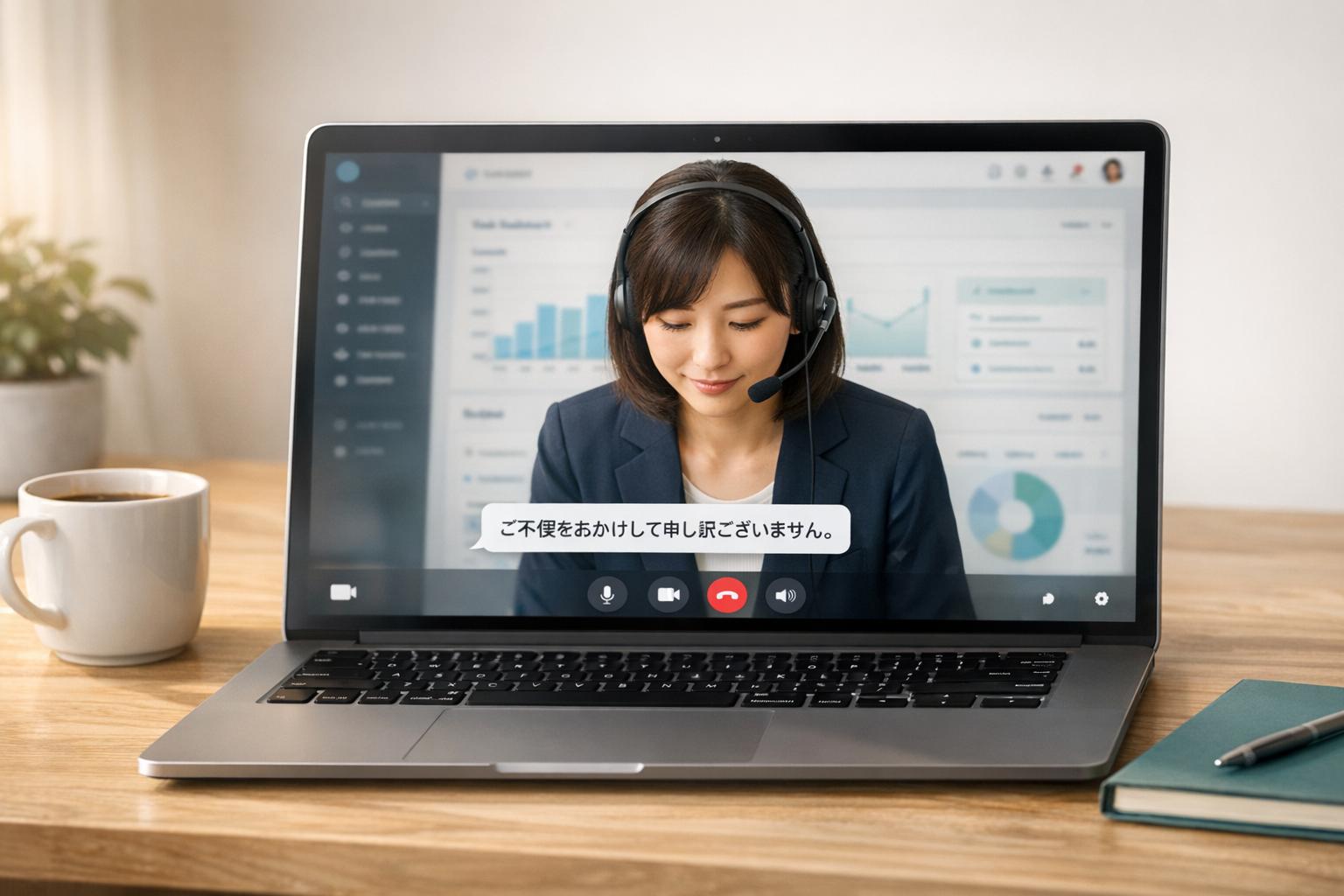
When entering the Japanese SaaS market, understanding the importance of apologies is crucial for building trust with customers. In Japan, an apology is not just about admitting fault – it’s about showing respect and maintaining harmony in relationships. Here are the key takeaways:
- Apologies Build Trust: Japanese customers value sincerity and accountability over excuses or technical explanations. A well-handled apology can strengthen business relationships.
- Cultural Norms: Phrases like “Mōshiwake arimasen” (there is no excuse) demonstrate full accountability and are essential in customer interactions.
- Customer Expectations: Quick acknowledgment of issues, collective responsibility, and clear communication are critical. Japanese customers prioritize empathy over immediate problem-solving.
- Impact of Poor Apologies: Skipping formal apologies or offering excuses can damage trust, leading to customer churn.
- Best Practices: Use formal, polite language, take responsibility, and outline steps to prevent future issues. Avoid shifting blame or using defensive language.
For SaaS companies, integrating proper apology protocols into customer support is not optional – it’s necessary to succeed in Japan’s relationship-driven market.
What Japanese Customers Expect from SaaS Support
Understanding the expectations of Japanese customers is essential for any SaaS company aiming to build strong relationships in this market. These expectations go beyond just language; they are deeply rooted in cultural values, making localization for SaaS products essential. When something goes wrong, Japanese customers prioritize how the issue is addressed, focusing on harmony, empathy, and the appropriate use of language. Let’s break down how these elements shape customer support interactions.
How ‘Wa’ (Harmony) Influences Customer Interactions
In Japan, when a problem arises – whether it’s a system outage, bug, or delay – customers expect the support team to focus on restoring wa, or harmony, in the relationship. Apologies play a key role in this process, acting as a way to clear the tension and allow both parties to move forward. Support teams often take on collective responsibility, apologizing on behalf of the entire company for any inconvenience caused.
Take, for example, a case shared by Pernille Rudlin. A Japanese sales team discovered they had been delivering raw materials to a customer at the wrong times and higher prices for over a year. Instead of blaming individuals, the new team leader and staff visited the customer in person, performed deep bows, and said "taihen moshiwake gozaimasen" (there is absolutely no excuse for this). By taking full accountability and promising better terms, they convinced the customer to resume 20% of their business on a trial basis.
This approach highlights a key difference in perspective: Japanese support teams see themselves as part of a unified organization, collectively responsible for the customer’s experience.
Apologies Reflect Empathy and Respect
For Japanese customers, acknowledgment of their inconvenience often matters more than a quick technical fix. As one manager from a Japanese tour company explained:
"Non-Japanese guides think that good service means responding quickly to fix a problem. But to the Japanese customer, solving the problem is a matter of course. More important is that you recognize the inconvenience they have experienced."
This perspective ties back to the cultural concept of hansei, or reflection. Support teams are expected to acknowledge the failure, reflect on its cause, and commit to preventing similar issues in the future. Skipping this step – or offering excuses (iiwake) – can erode trust. For instance, explaining that "the server was down due to a third-party provider" might sound defensive and miss the chance to demonstrate accountability.
The rule is simple: apologize first. Following the principle of "Mazu, ayamaru" (First and foremost, apologize) ensures that the customer feels their experience is valued before moving on to technical explanations or possible compensation.
The Role of ‘Mōshiwake Arimasen’ in Business Communication
Japanese businesses often rely on highly formal language to convey sincere apologies, with "Mōshiwake arimasen" being the gold standard. This phrase, which translates to "there is no excuse", reflects the highest level of formality in Japanese apologies. By using it, the speaker explicitly avoids making excuses, signaling full accountability.
Here’s a breakdown of commonly used apology phrases in Japan:
| Phrase | Formality Level | Typical Usage Context |
|---|---|---|
| Gomen | Casual | Among close friends or peers |
| Sumimasen | Standard/Versatile | Minor inconveniences; can also mean "thank you" |
| Gomen nasai | Polite | Personal settings or general polite conversation |
| Mōshiwake arimasen | Formal | Business settings, serious errors, or customer support |
Using "Mōshiwake arimasen" demonstrates hansei and shifts the focus to the customer’s experience rather than the technical cause of the issue. After the apology, companies typically follow up with a detailed report that outlines the problem, immediate actions taken, the root cause, and long-term solutions to prevent future occurrences. This approach underscores the importance of accountability and a commitment to improvement in Japanese business culture.
sbb-itb-a752276
Problems That Arise Without Proper Apologies in SaaS Support
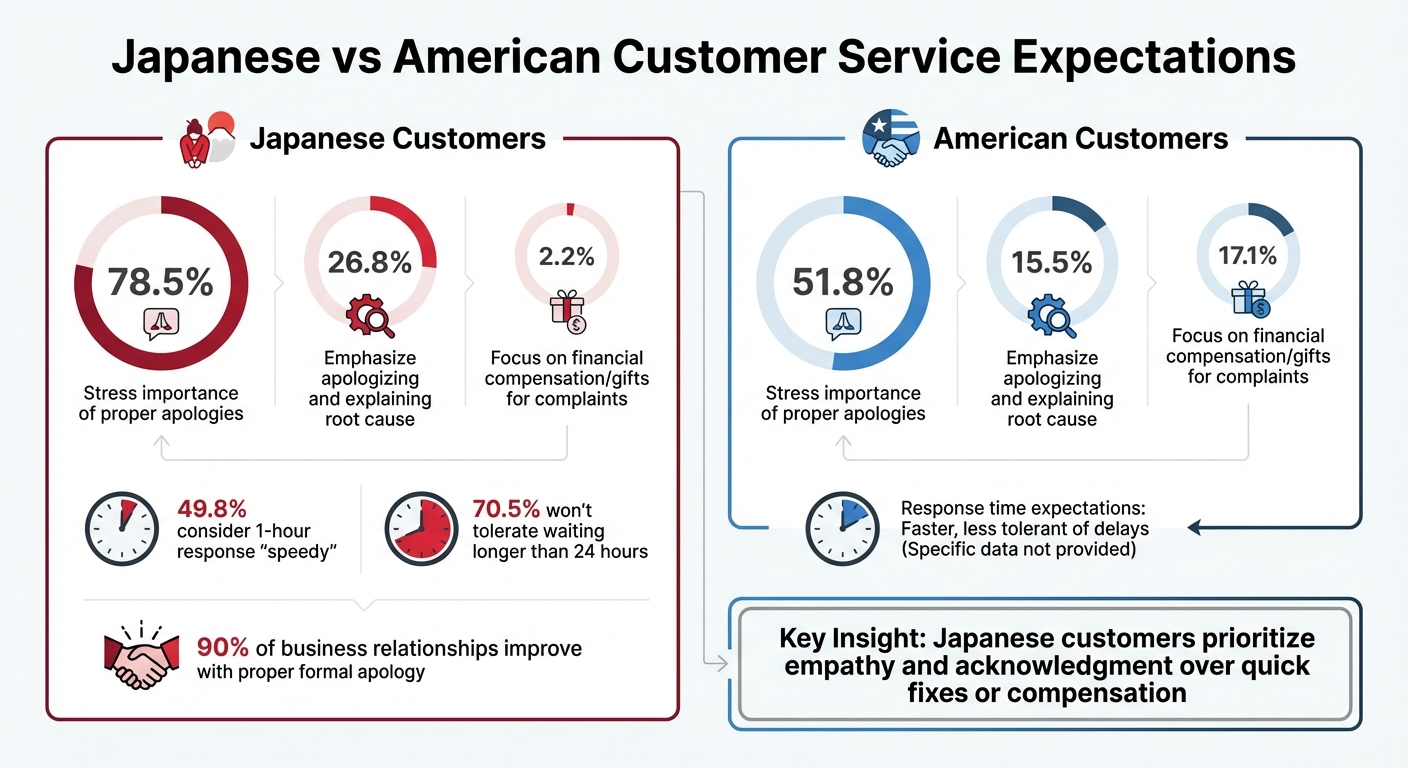
Japanese vs American Customer Service Expectations in SaaS Support
Navigating customer support in the SaaS industry isn’t just about fixing issues – it’s about addressing customer expectations, which can vary significantly across cultures. When apologies are mishandled, they expose critical gaps in how support teams build trust and maintain relationships.
When Support Protocols Don’t Match Customer Expectations
Many global SaaS companies prioritize speed and resolution in their support workflows, operating under the assumption that quick fixes equal happy customers. But this approach doesn’t always align with what customers value, especially in Japan. For example, 26.8% of Japanese service professionals emphasize apologizing and explaining the root cause of a problem, compared to just 15.5% of their American counterparts. This difference reflects a deeper cultural divide in what defines "good service."
When a SaaS platform experiences downtime or bugs, Western support teams often jump straight into problem-solving. They might say something like, "We’ve identified the issue with our third-party payment processor and are working on a fix." While this might seem efficient, Japanese customers often view such statements as iiwake – an attempt to deflect responsibility. For them, it’s not about who caused the issue; it’s about the disruption to their work.
Timing is another crucial factor. While 49.8% of Japanese respondents consider a one-hour response "speedy", a staggering 70.5% won’t tolerate waiting longer than 24 hours. Importantly, that first response must acknowledge the inconvenience upfront. Delaying acknowledgment until a solution is ready can erode credibility. Japanese customers expect immediate recognition of the issue, even if the fix takes longer. Failing to meet these expectations risks damaging trust and customer retention.
How Weak Apologies Damage Customer Trust and Retention
The way a company apologizes – or doesn’t – can significantly impact customer loyalty. In Japan, when a customer stops requesting an apology or explanation after a service failure, it’s often a sign they’ve already decided to end the relationship. This contrasts sharply with Japanese norms, where a request for an apology signals a willingness to rebuild trust.
Take service recovery strategies as an example: only 2.2% of Japanese service professionals focus on offering financial compensation or gifts to resolve complaints, compared to 17.1% of their American counterparts. Japanese customers value sincerity and accountability over material gestures. When support teams rely on generic statements like "Sorry for the inconvenience" or skip formal apologies altogether, they risk appearing insincere and unreliable.
A North American Customer Call Center Manager once noted:
American customers don’t want to hear ‘sorry’… They think it’s not sincere, and in any case, it is not the operative’s own fault, so why should they say sorry?
This perspective highlights a key challenge for global teams. While Western practices may avoid frequent apologies to sidestep admitting fault, Japanese customers expect collective accountability. Shifting blame – such as saying "That wasn’t my department" or "The developer made a mistake" – violates professional etiquette and further erodes trust.
Case Study: Customer Response to SaaS Feature Delays
Consider a global team announcing a delay: "Due to unexpected complexity in our infrastructure migration, the new analytics dashboard will be delayed by three weeks. We’re working hard to deliver the best possible experience." While this message might seem transparent and reasonable to Western audiences, Japanese customers could interpret it as an excuse stemming from poor planning. Phrases like "working hard" come across as vague and fail to demonstrate hansei – the self-reflection and commitment to preventive action that are central to Japanese business culture.
This example illustrates how technical explanations without proper apologies can backfire. A formal apology in Japan requires the use of proper keigo (polite language), full acceptance of responsibility, and clear steps to prevent future issues. Research shows that 90% of the time, business relationships in Japan improve significantly when a company successfully manages a formal apology process. On the other hand, focusing solely on technical explanations can lead to "silent churn", where customers quietly switch to competitors without raising concerns, leaving the relationship irreparably damaged.
How to Add Apologies to Your SaaS Support Strategy
Building on earlier insights, integrating genuine apologies into your SaaS support system requires more than just translating "sorry" into Japanese. It involves rethinking how your support team operates. 78.5% of Japanese customer service professionals stress the importance of proper apologies, compared to only 51.8% of U.S. professionals. This disparity underscores why standard Western support methods may fall short in Japan. Below, we’ll explore how to create effective apology scripts, train teams, and use technology to meet these expectations.
Creating Apology Scripts for Japanese Customers
Effective apologies in Japan must adhere to the mazu, ayamaru principle. This means starting with a formal expression of regret – like "Mōshiwake arimasen" or "Gomeiwaku o okake shite" (Sorry for the inconvenience) – before diving into technical explanations. A strong script should:
- Immediately acknowledge the inconvenience.
- Assume collective responsibility without shifting blame.
- Outline specific steps to prevent the issue from recurring, reflecting the concept of hansei (reflection).
For instance, instead of saying, "Our third-party payment processor experienced downtime", a more effective response would be:
"We apologize for disrupting your billing process. We take full responsibility and are implementing additional monitoring systems to ensure this does not happen again."
The difference is clear – the first focuses on the company’s problem, while the second centers on the customer’s experience and the company’s accountability.
To ensure these scripts resonate, professional localization services like Nihonium can help refine them. Their expertise in keigo (polite language) ensures the right tone and formality, avoiding literal translations that miss cultural nuances. However, even the best script needs a well-trained team to deliver it with sincerity.
Training Support Teams on Japanese Service Etiquette
Global support teams must understand that in Japan, apologies are about expressing regret for the inconvenience caused, not admitting personal fault. Training should emphasize that staff apologize as representatives of the company.
One critical point? Avoid using "but" in apologies. A phrase like "I’m sorry, but our system was overloaded" can come across as defensive or dismissive. What might seem like valid reasons – technical issues, supplier delays, or traffic – are often viewed by Japanese customers as unacceptable excuses when commitments are broken.
Additionally, training should stress the importance of visible effort. Providing regular updates, even before fully resolving an issue, shows diligence and is highly valued in Japanese service culture. Combining this human-centered approach with supportive technology ensures timely, empathetic responses.
Using Technology for Timely and Empathetic Responses
Technology is essential for meeting the high expectations of Japanese customers. 70.5% of Japanese customers won’t wait longer than 24 hours for a response, and 49.8% consider a reply within one hour ideal. While automation can speed up responses, it must be used carefully to avoid coming across as impersonal or dismissive.
A robust CRM system is key. Agents need instant access to customer histories, so they don’t have to ask the same questions repeatedly. This context allows for personalized apologies that align with the mazu, ayamaru principle – acknowledging the customer’s inconvenience first, before addressing technical details.
Even automated responses, such as those generated by AI, require careful design. Instead of starting with explanations (which may sound like excuses), initial messages should focus on acknowledging the inconvenience and reassuring the customer that a human team member will follow up with a detailed response. This approach strikes a balance between speed and the cultural need for a genuine, human-centered apology.
Benefits of Using Appropriate Apologies in SaaS Support
Better Customer Trust and Loyalty
In Japan, the right apology can trigger what’s known as the Service Recovery Paradox, where addressing a mistake properly can actually strengthen customer loyalty. A well-crafted apology reflects hansei – a practice of self-reflection – and shows your company’s dedication to improving and valuing the relationship. Key elements include immediate acknowledgment of the issue, taking full responsibility without making excuses, and outlining clear steps to prevent future problems. These actions demonstrate respect and commitment, which resonate deeply in Japanese business culture. In fact, around 90% of business relationships in Japan improve significantly when a formal apology process is successfully handled.
Kenji Shimizu, a Japanese professional, captures this sentiment perfectly:
I treat my apology or Hansei efforts as an investment in future business.
By embracing this approach, companies can shift how customers view them – from just another vendor to a trusted partner. This trust doesn’t just retain customers; it enhances your reputation in a competitive market.
Stronger Reputation in the Japanese Market
The SaaS market in Japan thrives on relationships, where trust and reliability often outweigh technical features. Customers don’t expect perfection – they expect accountability when things go wrong. A sincere, company-wide apology demonstrates collective responsibility and aligns with the cultural expectation of accountability . For Japanese customers, acknowledgment of their inconvenience often matters more than the technical resolution itself.
One tour company manager in Japan explained:
To the Japanese customer, solving the problem is a matter of course. More important is that you recognize the inconvenience they have experienced.
Even small gestures, like train conductors apologizing for delays as brief as three minutes, highlight how deeply ingrained the value of prompt acknowledgment is in Japanese culture. This attention to detail and empathy can significantly enhance your company’s standing when entering the Japanese market.
Case Study: Higher Retention Through Better Apologies
Let’s consider what happens during a service outage that impacts Japanese customers. Failing to acknowledge the issue quickly can erode trust, while a prompt and well-structured apology can preserve – and even strengthen – it. An effective response begins with immediately recognizing the inconvenience caused, taking full responsibility without excuses (iiwake), and using tools like the "5 Whys" analysis to identify the root cause and prevent it from happening again.
This approach, rooted in the hansei mindset, doesn’t just repair relationships – it can deepen them. Customers who feel their concerns have been genuinely addressed are more likely to remain loyal and may even advocate for your brand. In a market where trust and relationships drive decisions, this kind of loyalty can be a game-changer.
Conclusion
In Japan’s SaaS support landscape, an apology is far more than a polite gesture – it’s a cornerstone for building trust and fostering lasting customer relationships. Rooted in the Mazu, ayamaru principle, Japanese customers expect a prompt acknowledgment of any inconvenience. This isn’t about assigning blame or legal responsibility; it’s about showing humility and genuine care.
While non-Japanese teams often prioritize technical solutions, Japanese customers place significant value on recognizing their inconvenience. The way you phrase this acknowledgment is critical. In fact, precise wording is the top priority in Japanese business communication. Even small mistakes, like typos, can erode trust. Achieving this level of precision goes beyond simple translation – it requires a nuanced understanding of cultural expectations.
These cultural factors directly influence market success. For SaaS companies targeting Japan – the world’s second-largest enterprise software market – localized support isn’t just helpful; it’s essential. Consider the numbers: 90% of Japanese consumers prefer products with information in their own language, and 66% of B2B buyers are willing to pay extra for well-localized solutions. Without culturally tailored support, you risk alienating customers before they even experience your product’s full potential.
To finalize an effective support strategy, integrating concepts like hansei (self-reflection) and keigo (polite language) is essential. However, achieving this level of cultural alignment often requires expertise that most in-house teams may lack.
This is where services like Nihonium come in. They specialize in helping global SaaS companies navigate these cultural nuances by localizing everything from support scripts to marketing and sales materials. Partnering with professionals who understand both the technical and cultural demands of Japanese customers can help you build trust and loyalty – key drivers of long-term growth in this highly competitive market. In Japan, cultural adaptation isn’t just a nice-to-have; it’s a strategic necessity for thriving in the SaaS industry.
FAQs
Why are formal apologies important for SaaS companies in Japan?
In Japan, offering formal apologies holds great significance in SaaS customer support. These apologies are deeply tied to values like trust, humility, and maintaining strong connections. But an apology in this context goes beyond simply admitting fault – it conveys sincerity, accountability, and a genuine dedication to resolving the issue, which in turn fosters customer loyalty and confidence.
The Japanese principle of omotenashi – often described as thoughtful hospitality – underscores the importance of attentive service. This means that heartfelt apologies, paired with proactive solutions, are central to ensuring customer satisfaction. Addressing problems with care and sincerity can transform challenges into opportunities to build stronger relationships. On the flip side, neglecting this approach may risk damaging your reputation in Japan’s market.
How do Japanese cultural values shape customer support in SaaS?
Japanese values strongly emphasize humility, sincerity, and nurturing harmonious relationships, all of which shape what customers expect from support interactions. In Japan, apologies are more than just admitting fault – they’re a way to show respect, take responsibility, and build trust. Customers often look for heartfelt apologies paired with thoughtful, detailed solutions when issues arise.
Another key cultural element is hansei, or self-reflection. This practice encourages businesses to openly acknowledge mistakes and take meaningful corrective actions. Communication style is equally important, with a preference for polite and formal exchanges, often using keigo (honorific language). These cultural expectations create a high bar for customer service, where respect and attentiveness are essential for solving problems and building lasting relationships.
What happens if you don’t apologize properly in Japan?
In Japan, an apology is much more than just admitting a mistake – it’s a crucial way to uphold trust, maintain harmony, and show respect in both personal and professional settings. Without a proper apology, or if the apology feels insincere, relationships can suffer, trust can erode, and reputations may take a hit.
This cultural nuance is especially critical in customer support. Japanese customers expect apologies that are thoughtful and aligned with their cultural values. Overlooking these expectations can intensify conflicts, strain business relationships, and jeopardize future collaborations. On the other hand, a well-crafted apology demonstrates accountability and respect – two pillars for building lasting success in the Japanese market.
 English
  Japanese