

Japan’s software market generates over $50 billion annually, yet fewer than 20% of global SaaS companies ever break onto the first page of Japanese search results — and most lose whatever organic visibility they gained within six months of launch. The culprit is rarely the product. It’s the assumption that what works on Google.com will work on Google.co.jp.
Whether your team is pre-launch or already live and struggling to gain traction, each strategy below includes steps you can act on immediately. The gap between entering Japan and ranking in Japan comes down to one factor: localized SEO executed with cultural precision.
Strategy 1: Conduct Japanese Keyword Research
Japanese users search using distinct phrases and culturally relevant terms that differ fundamentally from English-language patterns. Identifying the right keywords requires understanding user intent, industry terminology, and subtle language variations—not just direct translation. Accurate keyword selection shapes everything from website structure to content development.
Understand Japanese Search Behavior
Japanese search behavior differs in several ways. Search queries reflect local norms, formalities, and language structure. Users often employ both Kanji (漢字) and Kana (カナ) forms, as well as mixtures of English loanwords. SaaS buyers may use industry jargon or abbreviations unique to Japan’s tech sector that don’t translate directly from English terms.
Japanese users often favor longer, more polite inquiry forms or use question-based searches. Mapping these patterns to user journeys reveals where and how prospects seek solutions online. Reviewing local forums, Q&A platforms, and customer service logs uncovers keyword opportunities and recurring pain points.
Utilize Local Keyword Tools
| Tool | Best For | Key Advantage |
|---|---|---|
| Google Keyword Planner (JP settings) | Organic trend research | Aligns language with local searcher intent; covers ~75–80% of Japan search volume |
| Yahoo! Keyword Tool | Demographic-specific queries | Surfaces queries popular with older and enterprise Japanese users |
| Keywordmap.jp | Competitor content analysis | Japan-focused analytics for keyword difficulty, seasonality, and content gaps |
| Ahrefs / Semrush (JP data) | Backlink and SERP analysis | Identifies competitor ranking pages and link profiles in Japanese SERPs |
Japan-specific keyword tools are essential because international platforms often overlook granular local trends. Yahoo! Japan and Google Japan dominate the market. For SaaS localization, compare keyword difficulty, search volume, and seasonality metrics in local contexts. English keyword dominance may not align with actual Japanese search volumes. Analyzing competitors’ Japanese websites and ad campaigns surfaces key phrases that drive relevant traffic and leads.
Consider Language Variations and Cultural Nuances
Japanese is context-sensitive, with different levels of formal language for business, technical, and casual contexts. SaaS buyers expect formal (Keigo 敬語) expressions in B2B content, while B2C apps could use simpler forms. Direct translations often miss subtle meaning, resulting in keywords that sound unnatural or lack resonance.
Regional variations also matter. Tokyo, Osaka, and other major cities use distinct terminology within the same industry. Some technologies are better known by imported brand names than literal Japanese words. Ongoing research informed by native speakers and market data keeps keyword strategies current and precise.
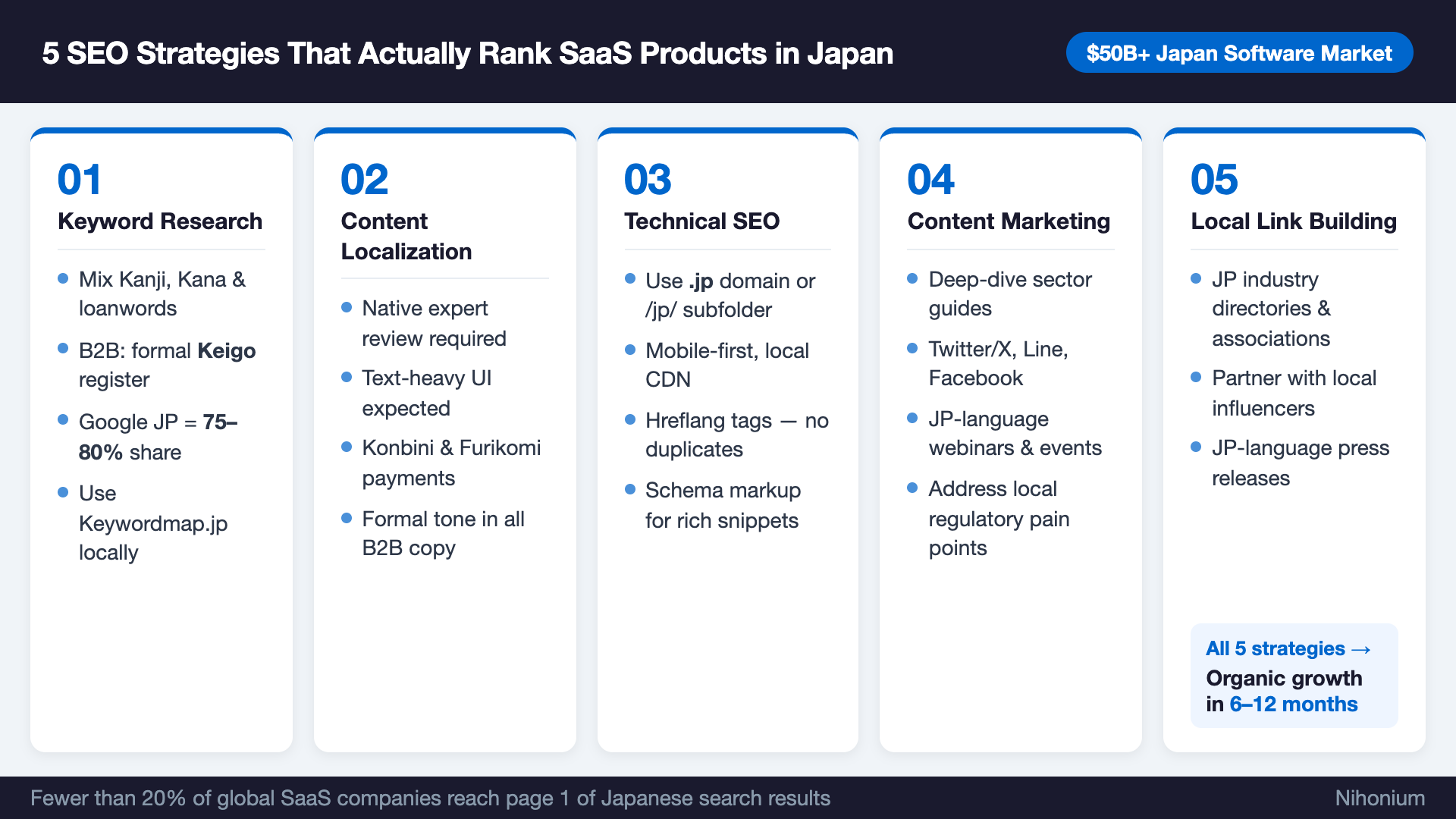
Strategy 2: Implement Effective Localization Techniques
Proper localization builds brand trust and provides a user experience that aligns with Japanese expectations. Translation alone falls short—true SaaS localization blends technical accuracy with cultural adaptation.
Translate and Adapt Content Accurately
Accurate translation of content, app interfaces, and documentation is foundational to localization. Simple English-to-Japanese conversion often produces awkward or unclear messaging. Errors in tone, idioms, or technical jargon harm credibility and hinder engagement with Japanese business users.
Native expert review is vital. Specialized linguists and SaaS professionals ensure localized content conveys your value proposition accurately, aligns with local conventions, and uses market-appropriate terminology. Tone should be consistently formal and respectful in B2B communications. For FAQs, help centers, and onboarding, balance clarity with the politeness expected in Japanese business culture.
Optimize User Interface (UI) and User Experience (UX) for Japanese Users
The UX/UI preferences of Japanese users differ from Western markets. Text-heavy interfaces, multiple navigation layers, and detailed tooltips are common and expected. Clarity, reliability, and visual simplicity are prioritized over bold design elements or minimalist trends.
Interactive elements—forms and dialog boxes—should accommodate language expansion, as Japanese characters may require more space. Using local symbols, color conventions, and layout structures supports user comfort and confidence. Aligning with these design sensibilities increases adoption and reduces friction during onboarding or workflows.
Align with Local Payment Methods and Preferences
Payment expectations in Japan differ and can impact SaaS conversion rates. While credit cards are widespread, Konbini (convenience store payments), Furikomi (bank transfers), and corporate invoicing are standard for both consumers and enterprise customers.
SaaS localization requires integrating these payment options, ensuring compliance, and reducing purchase barriers. Clear explanations of billing procedures and local-language customer support for payment issues build trust. Transparent fee representations and auto-renewal expectations reduce churn and support positive user experiences.
Best practices for SaaS localization in Japan:
- Engage native SaaS experts: Ensure translation and cultural nuances are market-appropriate and accurate.
- Customize interfaces: Tailor design, navigation, and interaction styles to Japanese user norms.
- Offer localized payments: Integrate preferred local payment methods and clearly communicate billing processes.
Strategy 3: Optimize Technical SEO for the Japanese Market
Technical SEO provides the foundation for sustainable organic growth in Japan. Site structure, speed, and compliance directly affect both rankings and user experience. Japanese users expect fast, efficient interactions, while search engines reward technically optimized websites. Meeting localized technical requirements is essential for long-term SEO success.
Choose Appropriate Domain and URL Structures
Domain choice and URL structure directly impact search visibility and user trust in Japan. Localized domains—such as .jp or subdomains—signal relevance and credibility to users and search engines. For SaaS companies, a dedicated Japanese site or subfolder (e.g., /jp/) enables customized SEO while preserving domain authority.
Page URLs should be clean, descriptive, and use UTF-8 encoding to render Japanese characters correctly. This prevents technical errors during indexing and link sharing. Avoid automatic translation plugins, which produce broken or unnatural URLs that damage both SEO and user perception.
Ensure Mobile Optimization and Fast Loading Speeds
Mobile usage in Japan continues rising, making mobile-first optimization essential. Responsive design, adaptive images, and touch-friendly navigation are baseline expectations. Google’s local ranking algorithms heavily weight mobile performance, and even minor loading delays increase bounce rates among Japanese users.
Compression techniques, local CDNs (Content Delivery Networks), and optimized scripts keep load times minimal. Test your SaaS site using Japanese mobile devices and local internet providers to identify market-specific bottlenecks. Google PageSpeed Insights (with Japanese settings) provides actionable recommendations tailored to the local environment.
Implement Hreflang Tags and Structured Data
For SaaS providers with a global footprint, correct hreflang implementation avoids duplicate content penalties and ensures proper language/region targeting. Hreflang tags tell search engines that your Japanese content is meant specifically for Japanese users and should appear in local search results. Errors in tag usage cause search confusion or lead users to the wrong site version.
Structured data, such as schema markup, enhances visibility in Japanese search results by enabling rich snippets and improving click-through rates. Industry-relevant schema ensures your SaaS offerings, reviews, and contact methods are highlighted, building confidence among potential customers.
Technical SEO checklist for SaaS localization in Japan:
- Use a .jp domain or dedicated Japanese subfolder/subdomain for targeted relevance.
- Optimize for mobile with responsive design and efficient image handling.
- Implement hreflang tags and localized schema markup for accurate search appearance.
Strategy 4: Develop a Content Marketing Plan
Content marketing drives both brand credibility and organic traffic in the Japanese SaaS market. Japanese buyers rely on in-depth information and community validation before adopting new SaaS solutions. Content aligned with local business context explains your proposition, builds trust, and engages prospects.
Create High-Quality, Locally Relevant Content
High-quality content resonates only when relevant to the target audience. In Japan, this requires understanding local business challenges, sector trends, and buyer priorities beyond simple translation. Japanese users value detail, transparency, and educational material in their purchase journey.
Content should address local industries and use cases, highlighting how your SaaS solution tackles common operational or regulatory pain points. Thought leadership articles, deep-dive guides, and clear product documentation build authority and trust. Generic blog posts lacking market-specific insights rarely perform well.
Build Presence on Local Social Media Platforms
Social media usage in Japan differs from Western conventions. While LinkedIn has some B2B presence, Twitter (called X), Line, and Facebook reach broader business and consumer audiences. Building brand presence on these channels is essential for content amplification and community engagement.
Consistent posting of product updates, thought leadership, and event participation drives awareness and interaction. Japanese users appreciate timely responses, clear communication, and participation in trending discussions. Use hashtags popular among the local tech community to increase content discoverability.
Engage in Local Events and Webinars
Participating in Japanese tech conferences, networking events, and industry webinars expands your reach and builds credibility. Online webinars—especially those with Japanese-language speakers—have grown in popularity for B2B lead generation.
Hosting or speaking at webinars targeted to Japanese business audiences allows you to demonstrate expertise, address local regulatory challenges, and answer live questions. Collaborating with local associations or platforms boosts attendance and relevance. Event-based content, such as recap blogs or follow-up Q&A sessions, extends impact across digital channels.
Elements of an effective content marketing strategy for Japan:
- Develop in-depth guides and sector-specific content addressing local business needs.
- Maintain visibility on Japanese social platforms (Twitter/X, Line, Facebook).
- Participate in webinars and live events to build local networking and credibility.
Strategy 5: Build Authority through Local Link Building
Authority is a decisive ranking signal for Japanese SEO. Local backlinks from trusted sites and endorsements from respected voices increase your credibility and drive targeted organic traffic. Effective SaaS localization includes building a diverse, high-quality link profile aligned to Japanese standards.
Secure Backlinks from Reputable Japanese Websites
Links from authoritative Japanese sites—industry associations, business directories, and tech news outlets—signal trustworthiness to search engines and users. Pursuing such links requires outreach and value exchange through original research, case study contributions, or sponsorships of local initiatives.
Collaborations with Japanese SaaS review platforms and business solution catalogs yield valuable backlinks and direct exposure to potential buyers. Regular monitoring of your backlink profile ensures continued quality and compliance.
Collaborate with Local Influencers and Partners
Influencer marketing is well-established in Japan’s B2B and tech sectors. Partnering with local thought leaders or industry experts expands your brand’s reach, increases inbound links, and builds third-party validation. Co-branded webinars, guest blog posts, and social collaborations enhance content credibility and organic SEO performance.
Partnerships with local companies—distributors, integration partners, or service providers—multiply linking opportunities and open new lead channels.
Utilize Press Releases in Japanese Media
Press releases remain effective in Japan’s media landscape. Publishing announcements about product launches, business milestones, or partnership agreements in Japanese-language outlets earns media coverage, high-quality backlinks, and brand authority.
Partner with PR agencies specializing in Japanese technology sectors to ensure your stories are framed persuasively and distributed to relevant industry journalists. Follow-up coverage with citation building adds further authenticity to your brand.
Primary link-building tactics for Japanese SaaS SEO:
- Acquire links from reputable Japanese business and tech directories.
- Partner with influencers and industry professionals for content collaborations.
- Publish Japanese-language press releases to secure media coverage and backlinks.
Your Next Move: Build a Japan SEO Foundation That Compounds
Ranking in Japan is not a one-time optimization—it’s a systematic process that rewards consistency. Start with a Japanese-native keyword audit to identify where your current content fails to match local search intent. From there, layer in proper UI/UX localization, local payment support, and a structured link-building outreach program targeting Japan-based industry publications and directory platforms.
If your SaaS product is already live in Japan, run a technical SEO audit specifically for hreflang implementation, page speed on Japanese mobile networks, and structured data completeness. These are frequently the silent issues that prevent organic visibility for foreign SaaS entrants. Set a 90-day milestone: measurable improvement in at least three of the five strategy areas outlined here.
Your Japan SEO Action Plan Starts Now
The five strategies above are most effective when treated as a system, not a checklist. Japanese-native keyword research informs your localization decisions. Localization quality determines your on-page SEO ceiling. On-page authority determines how aggressively you can build local links. All of it requires measurement against Japan-specific benchmarks—not global averages—to know what’s actually working.
Start by auditing your current Japanese keyword coverage against native search behavior. If your site was translated rather than localized, that’s the highest-return fix available to you right now. From there, prioritize technical on-page compliance and begin building relationships with Japanese industry publications and directories for link acquisition.
If your team lacks in-market expertise to execute these strategies at the required cultural depth, speak with a Nihonium market entry specialist — we work exclusively in Japan and can compress your path to organic visibility.
Prioritize the Gaps, Not the Full Roadmap
Ranking in Japan is not a single project — it’s a system where each strategy reinforces the others. Japanese-native keyword research informs your localization decisions. Localization quality determines your on-page SEO ceiling. On-page SEO amplifies the authority built through local link acquisition. Measurement against Japan-specific benchmarks keeps all four elements calibrated to actual market behavior.
The most common mistake SaaS teams make is attempting all five strategies simultaneously without sufficient depth. Start with a keyword audit scoped to your Japanese ideal customer profile. Use that data to identify your single largest content gap, then build outward. A focused 90-day sprint on keyword research and content localization consistently outperforms a diluted 12-month effort spread across all channels.
If your team lacks native Japanese SEO expertise in-house, the fastest path to traction is a market-entry partner who owns the cultural precision layer—not a generalist agency that will translate your existing English content and call it localized. Japan rewards specificity, and your SEO strategy should too.
Frequently Asked Questions: SaaS SEO in Japan
- How long does it take to rank a SaaS product in Japan with localized SEO?
- Most SaaS companies executing all five strategies consistently — keyword research, localization, on-page SEO, local link building, and performance measurement — see measurable organic growth within 6–12 months of launch. Competitive niches may take longer without an established domain authority in Japan.
- Is Google or Yahoo! Japan more important for SaaS SEO?
- Google dominates Japan’s search market with approximately 75–80% share and should be your primary optimization target. However, Yahoo! Japan — which runs on Google’s search index — still holds significant share among older and enterprise users, making it a valuable secondary source of keyword intelligence and audience data.
- Can I reuse my English SEO content strategy for Japan?
- No. Japanese users search using distinct phrases, formal language registers (Keigo for B2B), and culturally specific terminology that rarely maps to English-language keyword patterns. Direct translation of English content typically produces low-resonance pages that underperform in Japanese SERPs regardless of technical optimization.
- What makes Japanese keyword research different from English keyword research?
- Japanese queries mix Kanji, Kana, and English loanwords. B2B buyers use formal (Keigo) expressions, while search intent often surfaces through question-based or longer-form queries. Regional terminology differences between Tokyo, Osaka, and other markets add further complexity. Tools like Keywordmap.jp are purpose-built for these nuances.
- Do I need Japanese backlinks to rank in Japan?
- Yes. Links from authoritative Japanese domains — industry associations, local media, government portals, and Japanese-language directories — are strong trust signals for Google Japan. Foreign backlink profiles alone are generally insufficient to establish the local authority needed to compete for high-value Japanese SaaS keywords.
 English
  Japanese