
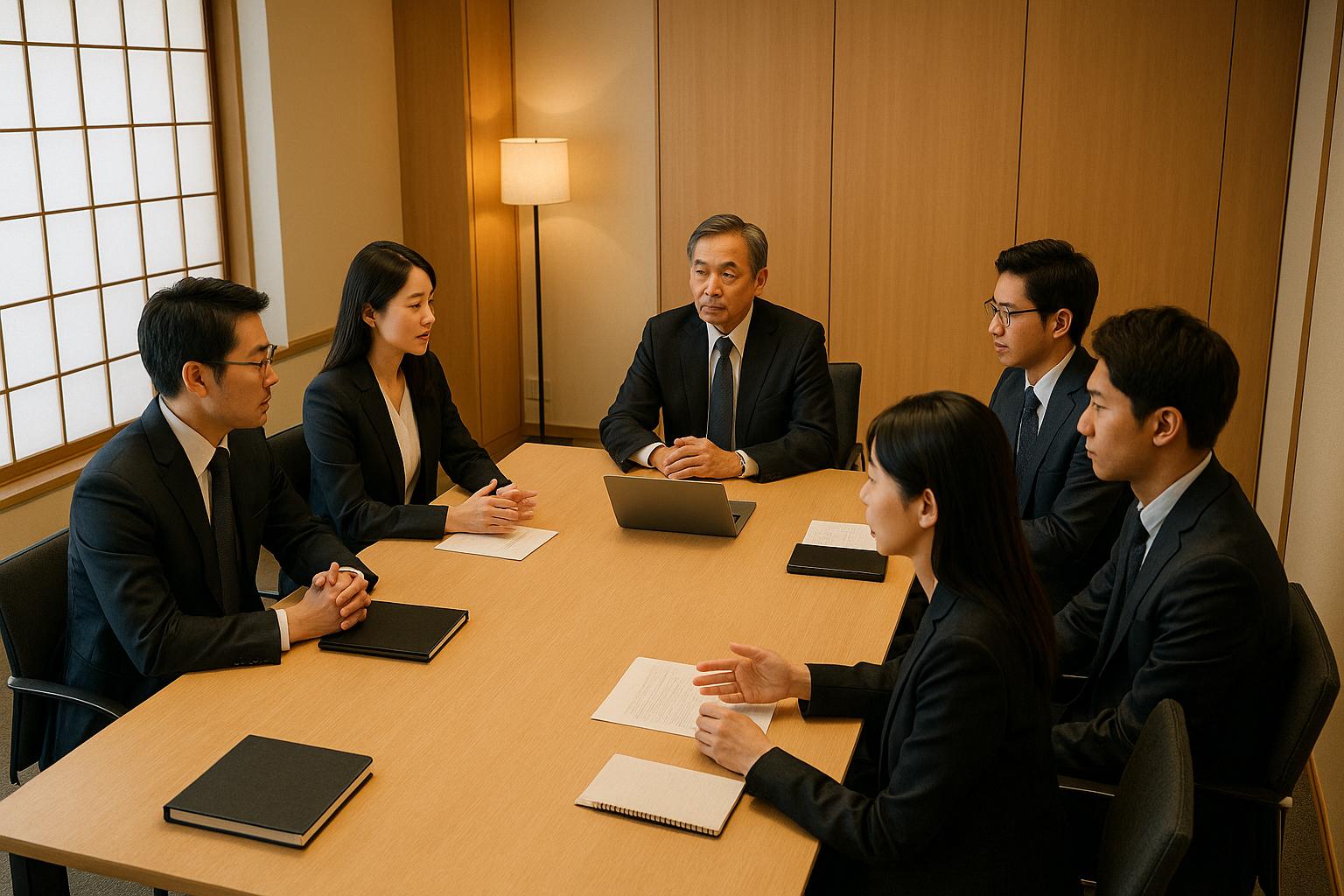
In Japan, business decisions are deeply influenced by hierarchical structures. These hierarchies are designed to ensure accountability, minimize risks, and foster consensus across all levels of an organization. Here’s what you need to know:
- More Management Layers: Japanese companies often have 30–40% more layers than U.S. organizations, with authority flowing strictly from the top.
- Consensus-Driven Decisions: Practices like nemawashi (informal discussions) and the Ringi system (formal approval processes) ensure decisions are thoroughly vetted.
- Collective Responsibility: Accountability is shared, meaning decisions are rarely made by one person alone.
- Seniority Matters: Promotions are commonly tied to tenure and age, emphasizing respect for experience.
For foreign companies, especially in fast-paced industries like SaaS, this slower, methodical decision-making process can be challenging but is key to building trust and long-term success. Patience, respect for the system, and localized strategies are essential for navigating Japan’s business culture effectively.
How Hierarchy Works in Japanese Organizations
In Japanese organizations, hierarchies are deeply rooted in cultural traditions, creating clearly defined roles that differ significantly from the flatter organizational structures often seen in the U.S.
What Drives Japanese Hierarchies
Three key principles shape the hierarchical systems in Japanese businesses, influencing how decisions are made and responsibilities are shared.
Seniority and Respect for Experience
In Japan, promotions are often tied to tenure and age rather than immediate merit or performance. Younger employees are expected to develop patience and gradually gain experience, reinforcing the belief that wisdom and expertise grow over time.
Collective Responsibility
Accountability in Japanese organizations is shared across multiple stakeholders rather than being placed on individuals. This collective approach means that both successes and failures are seen as group outcomes. Decisions are rarely made by a single person, instead requiring consensus, which fosters collaboration but can slow down the decision-making process.
Risk Mitigation Through Structured Oversight
To avoid costly errors, Japanese companies often implement multiple layers of management. These layers ensure decisions are carefully reviewed and risks minimized before actions are taken.
Who Does What in Hierarchical Organizations
Roles and responsibilities in Japanese organizations are clearly defined, ensuring a structured flow of authority and decision-making.
Senior Management (keiei-sha)
At the top of the hierarchy, senior management is tasked with setting the company’s strategic direction, shaping policies, and making critical decisions, particularly during crises. Their focus is on long-term goals and major initiatives, with middle managers translating these strategies into actionable plans.
Middle Management
Middle managers, such as general managers (bucho) and section chiefs (kacho), play a pivotal role in day-to-day operations. They act as intermediaries, consolidating input from junior employees and ensuring alignment with senior leadership. Middle managers are also central to the consensus-building process that defines decision-making in Japanese organizations.
Junior Employees
Junior employees are responsible for executing tasks, collecting information, and supporting their managers. While their decision-making authority is limited, they contribute valuable insights during the consensus-building process. Clearly defined roles at this level help prevent overlap, ensuring efficiency across the organization.
| Management Level | Primary Responsibilities | Decision-Making Authority |
|---|---|---|
| Senior Management | Strategic direction, major decisions, crisis management | High – final approval on major initiatives |
| Middle Management | Daily operations, coordination, consensus-building | Moderate – implementation and departmental decisions |
| Junior Employees | Task execution, information gathering, support | Limited – contributing input and recommendations |
This structured hierarchy ensures a predictable flow of authority, with decision-making power carefully distributed rather than simply delegated. While this approach promotes stability and thorough evaluation, it can lead to slower decision-making, which might be challenging for companies used to more agile systems. However, the deliberate nature of this system reflects the emphasis on stability and precision that is central to Japanese business practices.
How Japanese Hierarchies Shape Decision-Making Processes
Japanese organizations operate within a structured hierarchy that emphasizes meticulous decision-making through consensus and formalized processes. Unlike the faster, more direct approaches often seen in U.S. companies, Japanese firms prioritize thorough stakeholder involvement before finalizing major decisions. This methodical approach ensures that changes are supported across all levels of the organization. Practices like nemawashi and the Ringi system are key examples of how these hierarchies influence decision-making.
The Nemawashi Practice: Laying the Groundwork for Consensus
Nemawashi is a practice where informal, one-on-one discussions take place to address concerns and build agreement before any formal proposal is drafted. This step allows project leaders to gather feedback, identify challenges, and secure preliminary buy-in from key stakeholders.
For instance, if a Japanese company is planning to launch a new product, the project leader would first engage in nemawashi by meeting with department heads to discuss the idea, collect their input, and address any potential concerns. While this process can take weeks – or even months – it often leads to smoother implementation when the proposal moves to the formal stage.
The Ringi System: Formalizing Decisions
Once consensus has been established through nemawashi, the Ringi system comes into play to formalize the decision. This process involves drafting a document called a ringisho, which is circulated through various management levels for review and approval. Each layer of management provides their sign-off, ensuring that all perspectives are accounted for before the proposal reaches top leadership for final authorization.
This layered, systematic approach ensures that decisions are not only well-vetted but also have strong organizational support, making implementation more seamless once approved.
What Hierarchical Decision-Making Means for Business Results
The Japanese approach to hierarchical decision-making is known for its meticulous evaluations, which help minimize risks but can slow a company’s ability to react swiftly in competitive markets. This structured system has its strengths, but it also presents hurdles that may impact a business’s ability to thrive in today’s fast-moving global economy. Below is a closer look at the benefits and challenges of this decision-making style, along with its broader implications for business performance.
Benefits and Drawbacks of Hierarchical Decision-Making
Japanese hierarchical systems emphasize careful planning and collective agreement. Decisions undergo multiple layers of review, ensuring proposals are rigorously vetted and reducing the chances of costly mistakes. By distributing responsibility across the organization, these systems promote shared accountability. Practices like nemawashi (informal groundwork before formal discussions) and the ringi system (circulating proposals for approval) also create strong organizational buy-in, which facilitates smoother implementation compared to the more top-down methods often seen in Western businesses.
However, these advantages come at a cost. The focus on consensus means decisions typically pass through 30–40% more management layers than in U.S. companies, leading to slower response times – an issue that can be particularly challenging in fast-changing industries.
Additionally, this structure can stifle innovation. Lower-ranking employees may hesitate to challenge established norms or propose bold ideas, limiting creativity and the development of fresh perspectives. The traditional seniority-based promotion system can also demotivate younger, ambitious employees who may feel their opportunities for advancement are restricted. Moreover, the rigidity of this decision-making process can make it difficult for companies to adapt quickly to shifting market demands.
| Aspect | Benefits | Drawbacks |
|---|---|---|
| Decision Quality | Thorough vetting reduces costly errors | Slower response to urgent situations |
| Implementation | Strong buy-in; smooth execution | Delayed reaction to time-sensitive changes |
| Risk Management | Shared responsibility across organization | Reduced individual accountability |
| Innovation | Careful evaluation of new ideas | Limited creativity; fewer dissenting voices |
| Adaptability | Careful consideration of changes | Difficulty pivoting quickly to market shifts |
| Employee Motivation | Clear roles and responsibilities | Limited merit-based advancement opportunities |
The effectiveness of hierarchical decision-making often depends on the industry. In sectors where precision and reliability are critical – like manufacturing – this approach can lead to excellent outcomes. But in industries such as technology and digital services, where speed and flexibility are key, the slower pace can become a competitive disadvantage.
Recognizing these limitations, some Japanese companies are starting to experiment with flatter organizational structures and merit-based promotion systems. However, traditional hierarchies still dominate, reflecting a cultural preference for stability and collective decision-making over rapid change.
sbb-itb-a752276
Working with Japanese Hierarchies as a Foreign Company
For global SaaS companies looking to expand into Japan, understanding and respecting the country’s hierarchical structures is a must. Japan, the world’s third-largest economy, boasts a SaaS market expected to grow 3.7×, but entering this market requires a different strategy compared to Western countries. Companies that fail to adapt often find it challenging to build the trust and relationships essential for long-term success.
In Japan, management structures are more layered than in the U.S., creating a complex network of relationships and decision-making processes. Successfully navigating this structure requires patience, cultural sensitivity, and a deep commitment to fostering respectful relationships at every level.
Building Relationships Through Respect for Hierarchy
To work effectively within Japan’s hierarchical framework, building strong relationships is key. This starts with identifying and engaging decision-makers across multiple levels of the organization. Unlike in many Western companies, where a single executive might make purchasing decisions, Japanese businesses typically involve several layers of management. Key roles often include the bucho (general manager) and kacho (section chief).
Middle managers play a critical role in this process, often acting as gatekeepers to higher-level decision-makers. Building rapport with them is essential. This includes maintaining respectful communication, attending social events, and adhering to formal business protocols – such as exchanging business cards properly – to establish trust.
Patience is equally important. While U.S.-based companies might expect decisions within weeks, Japanese organizations often take months to achieve the internal alignment needed for significant commitments. Persistence, paired with respect for their process, goes a long way.
Using Localization Services to Navigate Hierarchies
Successfully navigating Japan’s hierarchical business environment requires more than just cultural awareness – it demands expertise in local practices. This is where specialized localization services come in, helping companies adapt products, content, and communication to align with Japanese business norms.
Native SaaS professionals ensure that your messaging is culturally appropriate and follows local protocols. For instance, companies like Nihonium offer tailored support, including fractional sales teams that handle everything from outreach to customer success.
Localization experts don’t just adapt your product; they also help simplify the complex process of engaging with decision-makers. Their guidance is particularly valuable when dealing with practices like nemawashi (informal consensus-building) and the ringi system (formal decision approval). Local teams know how to time these engagements, build relationships with key stakeholders, adjust marketing strategies, and craft proposals that align with Japan’s layered approval processes.
For companies venturing into Japan, partnering with experienced local teams provides the insights and expertise needed to build strong relationships and avoid costly mistakes. Their knowledge can make all the difference in successfully navigating this unique market.
Conclusion: Key Points for Working with Japanese Hierarchies
Entering the Japanese market successfully hinges on understanding the deeply ingrained hierarchical structures that shape business decision-making. These structures aren’t just about organizational charts – they reflect a consensus-driven approach to decisions. For instance, Japanese companies tend to have 30–40% more management layers, and 70% of them rely on decentralized decision-making to minimize risk. This method prioritizes thorough deliberation over speed, ensuring commitments are well-vetted and widely supported.
Patience and respect for these processes are essential. Unlike the faster-paced decision-making often seen in Western companies, Japanese organizations may take months to align internally. Practices like nemawashi (informal groundwork discussions) and the ringi system (formalized approval processes) play a crucial role. While this approach may seem slow, it ensures smoother implementation, clear accountability, and long-term stability once a decision is made.
Attempting to bypass these steps can damage trust and derail potential partnerships. Instead, success often comes from identifying and engaging decision-makers at various levels, building strong relationships with middle managers who act as key influencers, and maintaining respectful and consistent communication throughout the process. This approach not only respects the system but also builds credibility and trust over time.
While the consensus-driven model reduces risks and ensures thorough vetting, it does present challenges, such as slower decision-making and reduced agility. Companies must be prepared to navigate these hurdles thoughtfully.
For global SaaS companies aiming to enter Japan’s market, working with specialized localization services can make a significant difference. For example, companies like Nihonium provide customized strategies for market entry, including guidance on nemawashi and the ringi system. These experts can help streamline the process, manage relationships, and craft proposals that align with Japan’s layered decision-making framework.
Understanding and adapting to these hierarchical systems isn’t just about cultural awareness – it’s about recognizing and embracing a fundamentally different way of doing business. Companies willing to invest the time and effort to learn and adapt are far better positioned to succeed in Japan, one of the most influential markets in the world.
FAQs
How can foreign companies adapt to the slower decision-making process in Japanese businesses?
Japanese businesses often rely on a decision-making process that emphasizes consensus, which can take longer compared to other approaches. To work effectively within this framework:
- Allow for extended timelines: Decisions typically pass through several levels of approval. Build flexibility into your schedule to accommodate this.
- Focus on relationship-building: Trust and rapport are highly valued. Invest time in understanding the priorities and concerns of key stakeholders.
- Present detailed proposals: Thorough documentation and clear explanations are critical. Address potential risks and provide comprehensive information to meet expectations.
Understanding and respecting these practices can help foreign companies navigate the process more smoothly and build lasting partnerships.
How can I effectively connect with decision-makers in Japanese organizations given their hierarchical structures?
Understanding how to engage with decision-makers in Japanese organizations means appreciating their hierarchical culture and adapting accordingly. Begin by pinpointing the key decision-makers and gaining clarity on their roles within the company. Establishing connections with mid-level managers is equally important, as they often serve as vital links to senior leaders.
When communicating, use a formal and respectful tone, and be prepared for a slower decision-making process, as approvals typically pass through several layers. Showing dedication to long-term relationships and aligning your approach with Japanese business etiquette can strengthen your reputation and build trust over time.
How does collective responsibility influence innovation and risk-taking in Japanese businesses?
In Japanese companies, the idea of collective responsibility heavily influences how decisions are made. This approach strengthens teamwork and ensures accountability throughout the organization. However, it can also lead to slower innovation and less willingness to take risks. The reason? Decisions often require broad consensus, which encourages caution to minimize the chances of failure or disruption.
On the flip side, this method results in decisions that are carefully considered and widely supported, which helps reduce the risk of mistakes. For global businesses aiming to establish themselves in the Japanese market, recognizing and respecting this cultural practice is key to building trust and forming successful partnerships.
 English
  Japanese