

B2B Buying Patterns In Japan
Introduction
SiteEngine, a digital marketing agency in Japan, surveyed their B2B clients and put together data on their buying patterns. They surveyed 208 companies across different sizes ranging from companies with less than 20 employees to over 1000 employees. The survey responses come from different industries from manufacturing to financial services. The survey responses provided insights into how they came across the supplier and where the buyers collected the necessary information to make a decision. The takeaways can help further build on your Japan go-to-market strategy.
Lead Channels
Understanding where leads come from is important when building out a go-to-market strategy. Based on the responses from SiteEngine’s survey, the most common channel buyers use to come across potential suppliers is searching on search engines. Since search engines still dominate as a lead channel, it’s important for companies to optimize for SEO so their solution is front and center when buyers are searching for new solutions. It is also important to understand the search engine platforms in Japan, which has unique nuances specific to the local market.
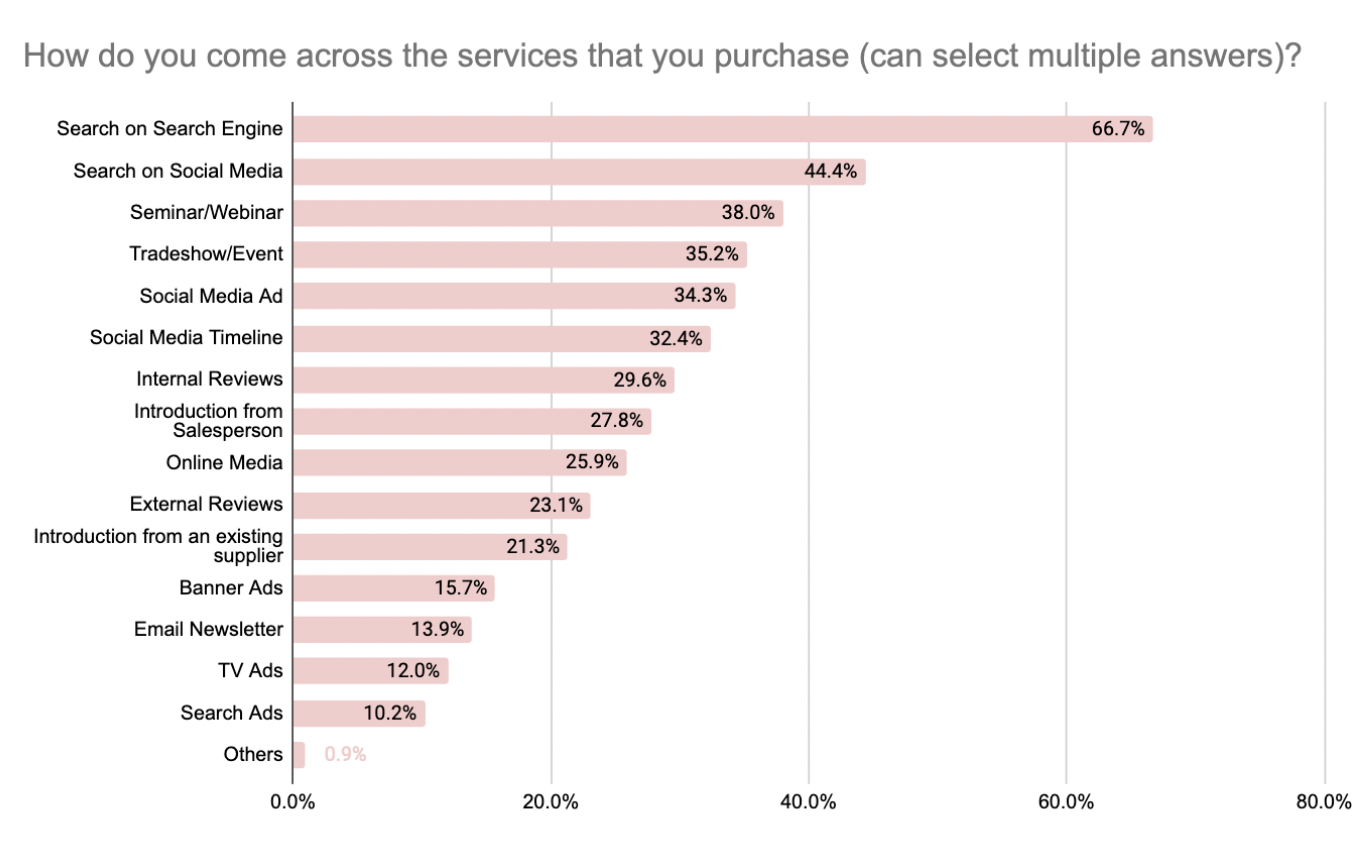 Searching on social media came in second when buyers are looking for new solutions. X (Twitter) is an important source of information, as Japan has the second most active users globally behind the United States. X (Twitter) is used commonly to share feedback on tools and platforms, especially in the tech community. Implementing a social media strategy can add a layer of robustness to the go-to-market strategy in Japan. Besides “Search on Social Media,” “Social Media Ads” and “Social Media Timeline” come in fifth and sixth, respectively. The impact of having a presence on social media cannot be understated. It may not directly translate to leads, but it helps with increasing awareness, as many potential buyers may be casually scrolling through the social media platform.
Other channels such as “Seminars/Webinars” and “Tradeshows/Events” are great for getting exposure. In-person events generally perform well, as business cards are a prevalent part of the Japanese business culture. In-person events are great for getting email addresses that could be nurtured into a warmer lead. If you’re having trouble collecting leads through online channels, exploring offline options could be a good way to increase awareness and engagement.
Impactful Sales Collateral
Once potential buyers are further down the sales process, they’ll need to collect information for their decision-making process. In their survey, SiteEngine asked what information/sales collateral makes an impact on their decision-making.
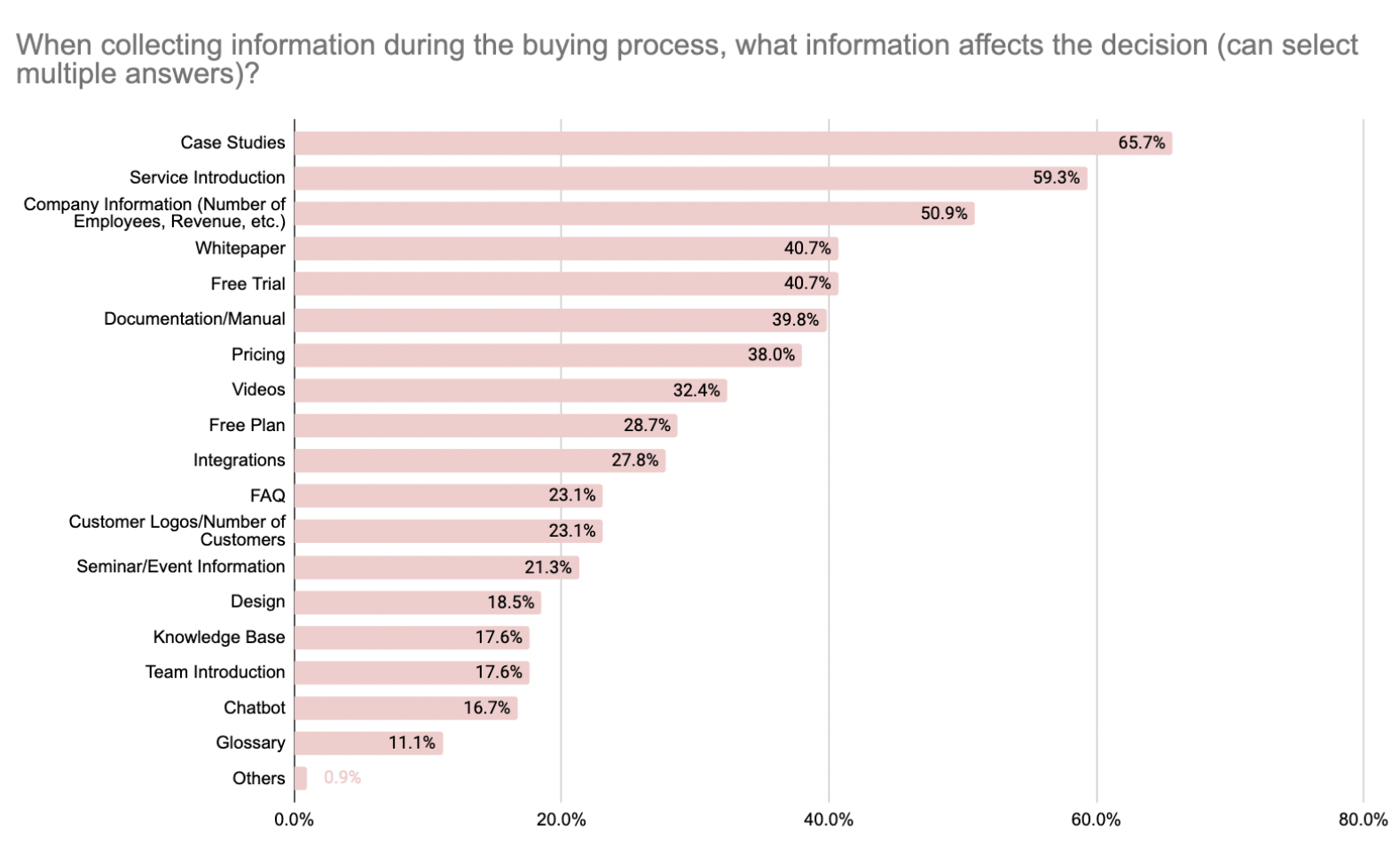 The most important information for buyers is case studies. Case studies are important since they provide additional context for buyers, especially if the case study is in the same vertical as the buyer. They provide a clearer picture of how the solution may be implemented and used. They also provide a clearer idea of the rewards/results after implementing the new solution. Lastly, case studies provide social proof which adds a layer of certainty and security in using the solution. Since other companies are using the product, the potential buyer feels safe moving forward with their decision.
Overall, general service/product information is important with “Service Introduction,” “Whitepaper,” and “Documentation/Manual” coming in second, fourth, and sixth, respectively. “Company Information,” which provides additional context on the soundness of the company through the number of employees, how long the company has been in business, and revenue highlights an interesting and unique aspect of Japanese business culture. Japanese businesses make decisions as a group. Many people part of the consensual decision-making process are not end-users, so the Company Introduction material will be where they get the context to make a decision. Ensuring that the deck is properly created is a major part of gaining trust in Japanese business culture. Japanese companies need to trust their business counterparts when moving forward with a purchase. The legacy of the company is one way of measuring this.
Source of Information
In addition to sales collateral, the buyers get information on a service/product from different channels. When collecting information, the number source is “Introduction/WOM from Business Partners.” Buyers tend to collect information from people who have used their products. Business partners will introduce and share feedback on tools that have benefited them.
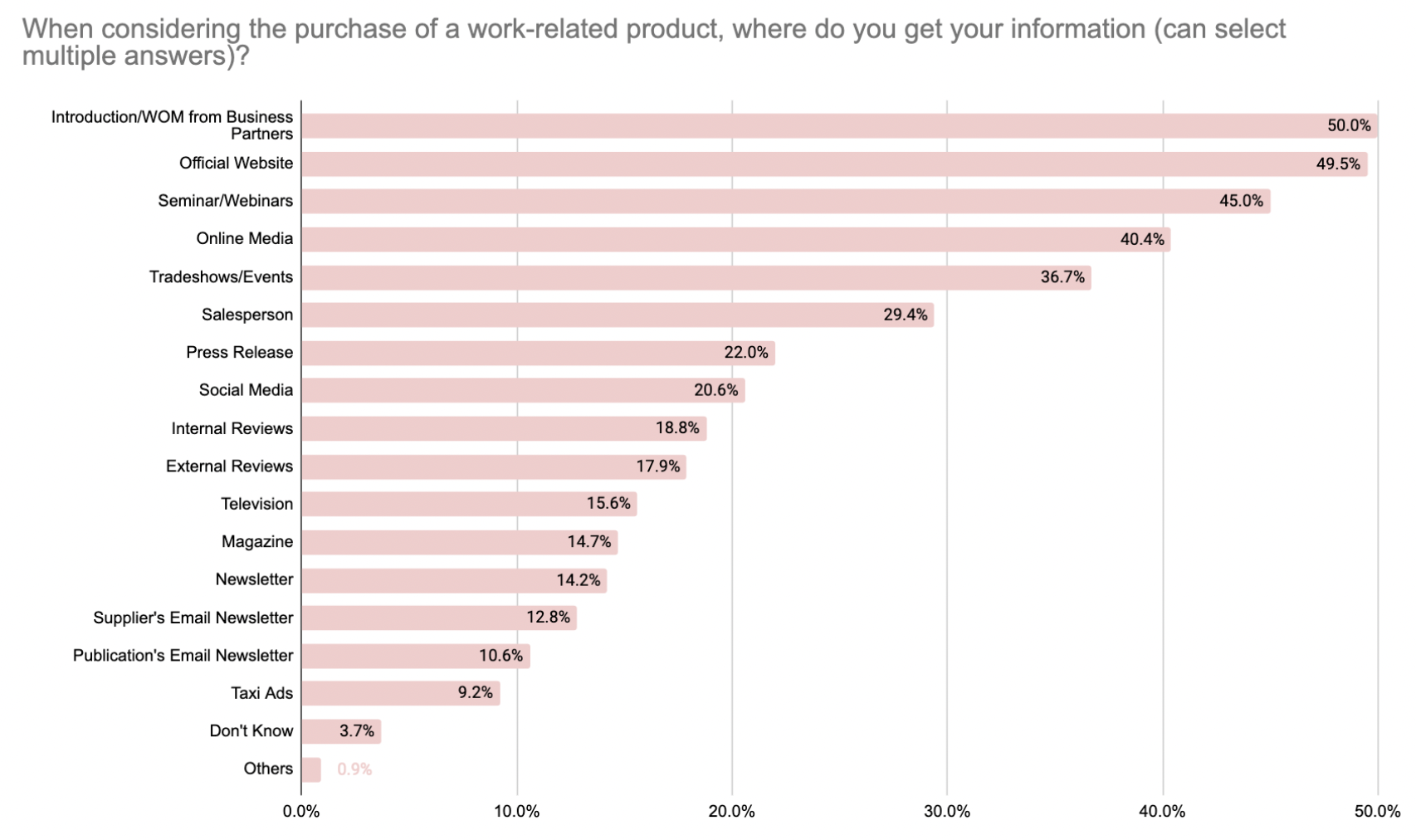 The second main source of information is the official company website. Given that the official website is a key source of information, localization is key to servicing Japanese buyers. Localization can be a big project to take on and there are definitely ways to be strategic.“Seminars/Webinars” ranks third as a source of information. Especially for new technologies, market education is key to lowering the barrier to entry. “Tradeshows/Events” are also important, as they provide a unique opportunity to share company information offline.
Conclusion
The B2B buyer pattern highlights the importance of ubiquitous channels such as Search, but it also highlights that some channels may be different in Japan. Social media and offline events may play a larger role than imagined. Including these initiatives can add more robustness to the Japan GTM strategy. As for information collecting, having a Japanese website and case studies is imperative to build social proof and gain the trust of the Japanese market. AI may change this landscape, but these patterns are very prevalent today. If you’d like to learn more about GTM in Japan, book a consultation here.
 Japanese
  English