

The State of SaaS in Japan 2023-2024
Introduction
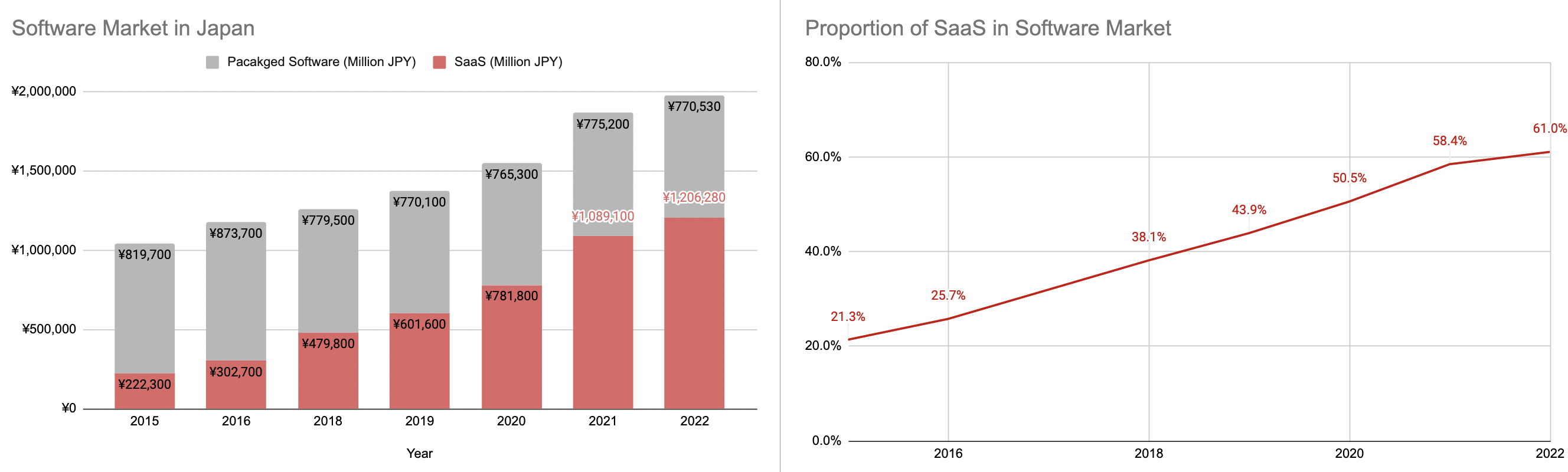
SaaS in Japan is in the midst of high growth with more companies. From the end of 2015 to 2022, the SaaS market experienced over a 30% CAGR and is expected to continue its growth. Software in Japan is still catching up to other markets. Still, being the second largest enterprise software market worldwide, SaaS will continue to be an interesting and important market for global companies and investors. For the 2024 funding funding trends, you can visit this post.
Startup Investments
Starting with overall startup investments, 2,828 companies received investments in 2023. The overall investment amount was 753.6b JPY. This was down from 2022 when 3675 companies received a combined 966.4b JPY. Similar to the global markets, startup investments dropped with fears of a possible recession.

Source: Initial’s “Startup Finance 2023”
Though the number of investments and the gross value decreased, the average investment stayed flat. This is a reflection of larger early-stage rounds trend and more later stage companies later-stage round becoming more available as they don’t go public as quickly.

Source: Initial’s “Startup Finance 2023”
SaaS Investments
The overall SaaS market has experienced significant growth and is expected to grow at an 11.72 CAGR through 2027. The overall software is growing from demand for increased labor productivity with the looming 2030 problem (significant labor shortages expected from 2030). SaaS is also eating up with packaged software market.
Source: Boxil’s “2023 SaaS Report”
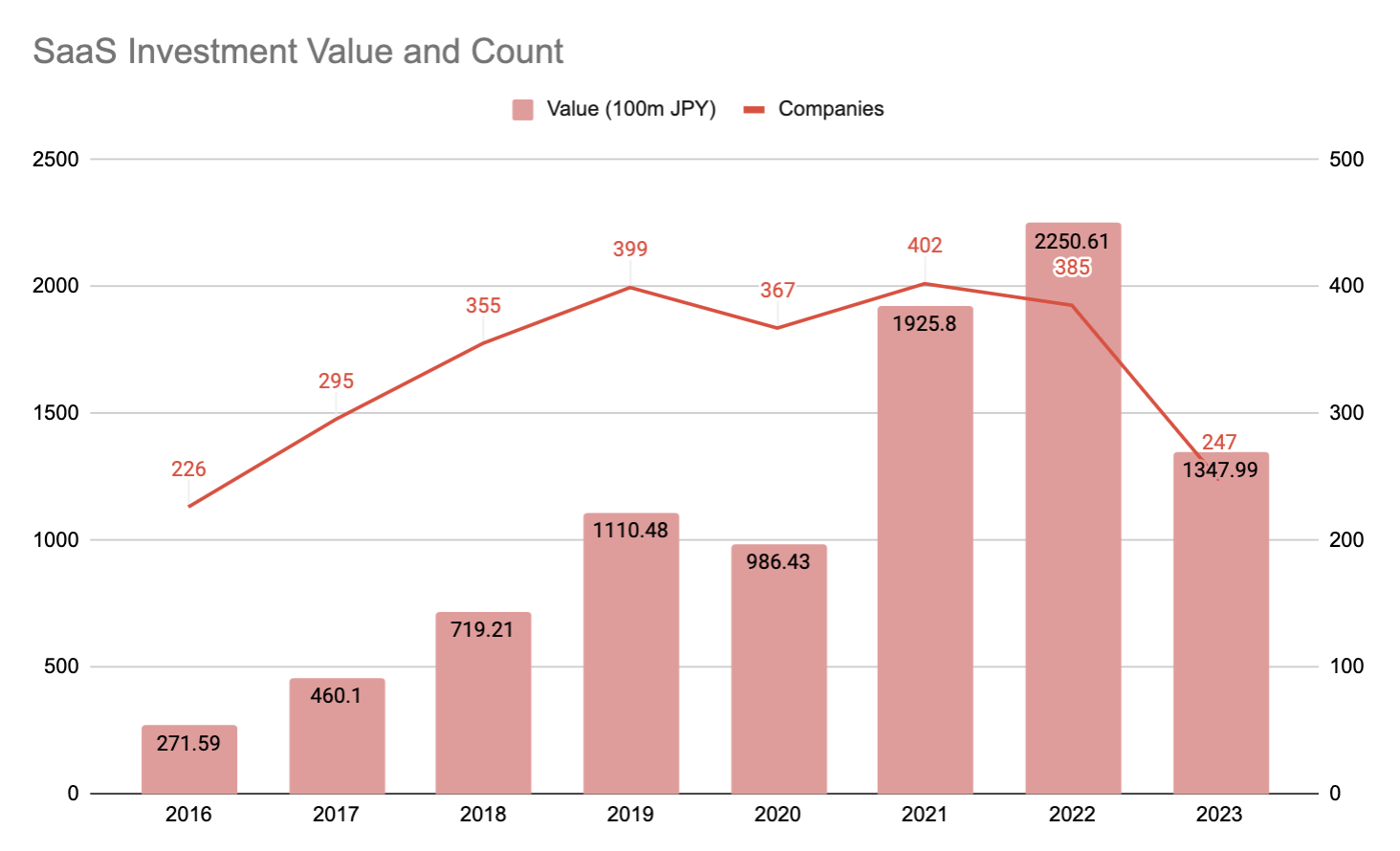
That being said, SaaS investments in 2023, like overall startup investments, dropped from 2022. In 2023, there was a total investment of 134.8b JPY in 247 companies.
Source: Boxil’s “2023 SaaS Report”
SaaS also saw a deceleration when looking at SaaS investment as a proportion of the overall startup investments. In 2022, 23.3% of all startup investments went into SaaS companies. This figure dropped to 17.9% in 2023.

Source: Boxil’s “2023 SaaS Report”
The average investment also dropped slightly from 585m JPY to 546m JPY. The SaaS average investment remains higher than the average startup investment.

Source: Boxil’s “2023 SaaS Report”
Though 2023 ended up being a slower year for SaaS investments in Japan, the SaaS market is expected to continue its robust growth. The low level of SaaS adoption is an optimistic indicator of further growth. SaaS adoption in Japan is still low in Japan especially among SMEs, as they place lower priority on digital transformation compared to US companies. There is a lot of room for further SaaS adoption. SaaS adoption has been limited with only 34% of companies embracing SaaS.
Predictions
Moving Beyond Laying the Groundwork
SaaS adoption in Japan has been highly focused on laying the groundwork and creating efficiencies. For example, SmartHR, an HR platform, crossed the $100m ARR mark in 2024. The software that has been widely accepted has been around improving existing systems with the power of software. Horizontal SaaS services like HR services, back office solutions, and marketing platforms have accelerated. Vertical SaaS has also done well in the past decade addressing niche inefficiencies. The motion has been around laying down the groundwork.
Now that the foundational layer exists, SaaS in Japan seems to be moving beyond efficiency gains and towards additional value. One example of this is the sales space. CRMs have been widely accepted and implemented. The next phase is adding another layer by implementing a more robust sales process. SalesMarker reflects the next level for sales in Japan and has had major success crossing 900m JPY ($6m USD) ARR in 18 months — With the foundational sales tools and processes in place, SalesMarker provides further value to sales teams by providing a ZoomInfo-like database of prospects in Japan and flagging buying intent using AI.
Another category that may be ripe for the next phase is user research. With UI/UX design becoming a common practice, the next phase is collecting feedback. The next few years may be opportunistic for both qualitative and quantitative user research platforms. Other categories that build on top of existing groundwork may find success in Japan.
SaaS Companies Choosing to Stay Private Longer
Japanese companies can go public early compared to US companies, as the listing requirements are much looser in Japan. At times, there’s a conflict between the founders and investors in going public. Investors may want to lock in their gains by going public. Going public may not be the best option for companies. SmartHR is the poster child for companies succeeding while staying private. Investors are now more open to companies staying private which has resulted in more later-stage rounds. There’s more acceptance of staying private and this trend, which is already prevalent, will likely continue.
Conclusion
SaaS investments saw a dip in 2023 compared to 2024. SaaS investments may bounce back to higher numbers than in 2022. With the Nikkei reaching record highs, global investors are looking to access Japan. With an influx of foreign investors and a strong base of domestic investors, the desire to invest in Japan exists.
The level of SaaS adoption in Japan is still low, so SaaS will likely continue to be a highly relevant topic moving forward. With Japan being the second largest enterprise SaaS market worldwide, the number of SaaS offerings is growing with new local companies being started and global companies entering Japan. There is plenty of space for SaaS companies, as many categories have limited offerings or the category has yet to be created in Japan. If you are considering the Japanese market, learn more by booking a call here.
 English
  Japanese