
How to Localize Your SaaS Product for Japanese Users Without Losing Its Essence
Penetrating the Japanese SaaS (Software as a Service) market presents a significant opportunity for global providers. However, it is also a complex endeavor requiring more than simple translation. Japanese users have distinct expectations around product design, customer support, and overall experience shaped by local business culture, language, and regulations. For SaaS companies without existing Japanese operations or robust local expertise, achieving true localization while staying true to the product’s original value proposition can be daunting.
This article offers a thorough, strategic blueprint for SaaS companies seeking to localize for Japan. We detail the commercial significance of this market, confront key entry challenges, and outline actionable approaches from market research to customer support. The focus throughout is on retaining your product’s identity while aligning with Japanese norms and preferences, leveraging proven practices and highlighting essential considerations. Whether you are planning initial entry or looking to sharpen your current localization efforts, this guide aims to address the critical pain points international SaaS teams face in Japan.
The Significance of the Japanese SaaS Market
Japan is the world’s third-largest economy and a tech-savvy market with a mature digital ecosystem. The growing demand for SaaS solutions across diverse sectors—finance, manufacturing, retail, and beyond—creates ample openings. Yet, the path is lined with nuanced requirements, from compliance frameworks to local partnership dynamics, that newcomers must recognize and respect.

Localizing SaaS for Japan means more than just offering Japanese-language support. It demands a strategic transformation across your entire go-to-market and product development plan. Companies must understand the underlying customs and technological norms unique to Japanese enterprises and users. The reasons are clear: only SaaS products well-aligned with these local norms are likely to achieve meaningful adoption and sustained growth.
For further insights into why the Japanese market is uniquely challenging and why fewer startups thrive there, consider learning more about the cultural and entrepreneurial landscape affecting SaaS entry by exploring gaps in local entrepreneurship and startup formation.
Key Challenges in Entering the Japanese Market
Localizing SaaS for Japan means tackling distinctive hurdles that extend beyond language. Here are the most pressing challenges international SaaS companies face:
– Cultural Nuances in Business Relationships: Japan’s business culture emphasizes formality, trust-building, and indirect communication. Impersonal or aggressive sales approaches may backfire.
– Customer Expectations: Japanese users expect rapid and courteous support, user interfaces aligned with aesthetic sensibilities, and comprehensive documentation in their own language.
– Regulatory Complexity: Japan enforces robust privacy and data-protection standards, including the Act on the Protection of Personal Information (APPI), with strict requirements for data localization and processing.
– Local Competition and Trust: Consumers often favor established domestic brands or international players with a visible and credible local presence.
Successfully overcoming these hurdles often means forming local partnerships, engaging native experts, and dedicating resources to deep, market-specific research. If your SaaS company is new to Japanese localization, studying localization best practices tailored for SaaS products in Japan is highly recommended.
Conducting Comprehensive Market Research
Before initiating localization, a rigorous market research process tailored to Japan’s unique ecosystem is essential. This goes far beyond standard competitor analysis and requires a multifaceted approach. Companies must explore not only what products exist and who uses them but also the “why” behind user choices and the institutions influencing their decisions.
Effective market research enables SaaS providers to avoid costly missteps in product presentation, pricing, and support. It arms you with the insights needed to shape your localization, go-to-market, and long-term customer success strategies.
Analyzing Japanese Business Culture and Consumer Behavior
Understanding Japanese business culture is critical when localizing SaaS for Japan. Decision-making often relies on consensus (nemawashi), and risk aversion can prolong purchasing cycles. Foreign SaaS vendors must recognize that value is frequently communicated through reputation, reliability, and social proof, rather than aggressive ROI claims or disruptive marketing.
Japanese consumers, in both B2B and B2C contexts, are typically sensitive to service quality, even more than price. They expect clear communication, responsive support, and little friction in onboarding or usage. Customer satisfaction surveys, reviews, and NPS (Net Promoter Score) feedback carry significant weight in building brand perception.
A multi-pronged research plan should include:
1. Stakeholder Interviews: Speaking directly with prospective clients, partners, and industry analysts reveals specific local concerns and requirements.
2. Competitive Product Analysis: Deep dives into successful local and foreign SaaS solutions can expose UI/UX, support, and pricing norms.
3. Online and Offline Community Monitoring: Tracking tech forums, social media groups, and industry events highlights current pain points and unmet needs.

Identifying Target Audience and User Preferences
Accurately defining your Japanese target audience is essential for successful product localization. Demographic, firmographic, and psychographic segmentation enables your team to configure everything from onboarding flows to marketing funnels with precision.
Japan’s B2B buyers, for example, often prioritize long-term vendor stability, robust onboarding materials, and referenceability. Meanwhile, B2C segments might seek intuitive interfaces and integrations with popular Japanese platforms.
To zero in on your target users’ preferences:
– Analyze Digital Usage Trends: Mobile and desktop SaaS behaviors diverge in Japan compared to other markets. Understanding device preferences can shape your product’s front-end priorities.
– Localize User Surveys: Run surveys and user testing sessions in Japanese, ensuring feedback reflects real cultural expectations and not just language translation issues.
– Map the Customer Journey: Chart the Japanese user journey across discovery, purchase, onboarding, and support to identify key expectations at every stage.
Comprehensive market research is not a one-off exercise but an ongoing process underpinning all localization decisions, from product design to communications. For actionable advice on Japanese B2B SaaS buying patterns, you can deepen your understanding by exploring how Japanese business buyers differ from their Western counterparts.
Language and Cultural Localization
True localization requires integrating linguistic and cultural nuances. This cannot be achieved through direct translation or generic internationalization tools alone. Language and cultural adaptation must be woven into content, documentation, marketing assets, and customer communications, shaping every user touchpoint.
One primary objective is to speak to users in a way that feels native—not merely understood, but genuinely familiar and comfortable. This can enhance trust, facilitate onboarding, and improve satisfaction across all stages of the customer relationship.
Translating Content with Cultural Sensitivity
Effective translation is more than replacing words. Japanese utilizes honorifics, polite grammatical structures (keigo), and indirect forms that express humility or respect. Each context—be it marketing, technical documentation, or customer support tickets—demands the correct register to suit both the product and audience.
Literal translations can confuse or even alienate Japanese users. Instead, input from native SaaS experts is invaluable, ensuring every phrase feels as though it was written originally for Japan. Marketing and help content must also be culturally reviewed so that product explanations and metaphors resonate with local realities.
Common approaches to sensitive translation include:
1. Review by Native Specialists: Engage Japanese SaaS industry professionals to validate all content, not just linguists.
2. Glossaries and Style Guides: Develop internal reference materials to enforce consistency in terminology, honorifics, and technical vocabulary.
3. Iterative Validation: Test communications in real user environments to identify and correct unintended ambiguities or tone issues.
Adapting Communication Styles and Tone
Effective communication in Japan centers on politeness, indirectness, and empathy. User-facing materials, from notifications to support responses, need to be re-authored with typically Japanese conventions—generally more formal, with emphasis on community and prudence.
In B2B contexts, documentation, emails, and presentations should demonstrate professionalism and reliability without overt self-promotion. In B2C domains, approachable yet polite messaging reassures users and builds loyalty.
Adapted communication involves:
– Adjusting tone to match audience expectations, using keigo and indirect phrasing where appropriate
– Avoiding idioms, references, or humor that may not translate or could be misinterpreted
– Aligning content workflows so Japanese localization is considered from the start, not as an afterthought
Language and cultural alignment are powerful levers for user trust and perception—core variables in SaaS adoption.
User Interface (UI) and User Experience (UX) Adaptations
Aligning your SaaS product’s UI and UX to match Japanese preferences is essential for adoption. Visual and functional expectations diverge from Western norms, and failing to address these can hinder usability, engagement, and ultimately, conversions within the Japanese market.
Japanese users often have specific ergonomic, aesthetic, and functional requirements rooted in daily digital habits and cultural values. Understanding these expectations is crucial to localize SaaS for Japan without sacrificing the original product vision.
Designing for Japanese Aesthetic Preferences
Japanese visual design often prioritizes clarity, structure, and informativeness. Interfaces may appear more information-dense than their Western counterparts but avoid overwhelming users through careful hierarchy and organization.
Icons, color schemes, and imagery must be vetted for cultural appropriateness. For instance, the use of certain colors or motifs—such as red for denoting attention—may differ from Western practices. Typography choices also matter; Japanese users may expect vertical as well as horizontal reading options in certain contexts.
Key strategies for aligning with Japanese UI/UX expectations:
1. Adapt Layouts for Content Density: While minimalism is valued, Japanese sites frequently include more navigational aids, contextual help, and quick links.
2. Prioritize Readability: Ensure text is legible at various font sizes, considering the unique requirements of Japanese scripts (kanji, kana).
3. Cultural Imagery Auditing: Use visual elements and symbols that resonate positively in the Japanese context, avoiding themes with negative or unintended connotations.
For a comprehensive understanding of UX nuances and how Japanese SaaS design diverges from Western norms, you might want to compare the key differences in user interface philosophies.
Ensuring Compatibility with Japanese Character Sets
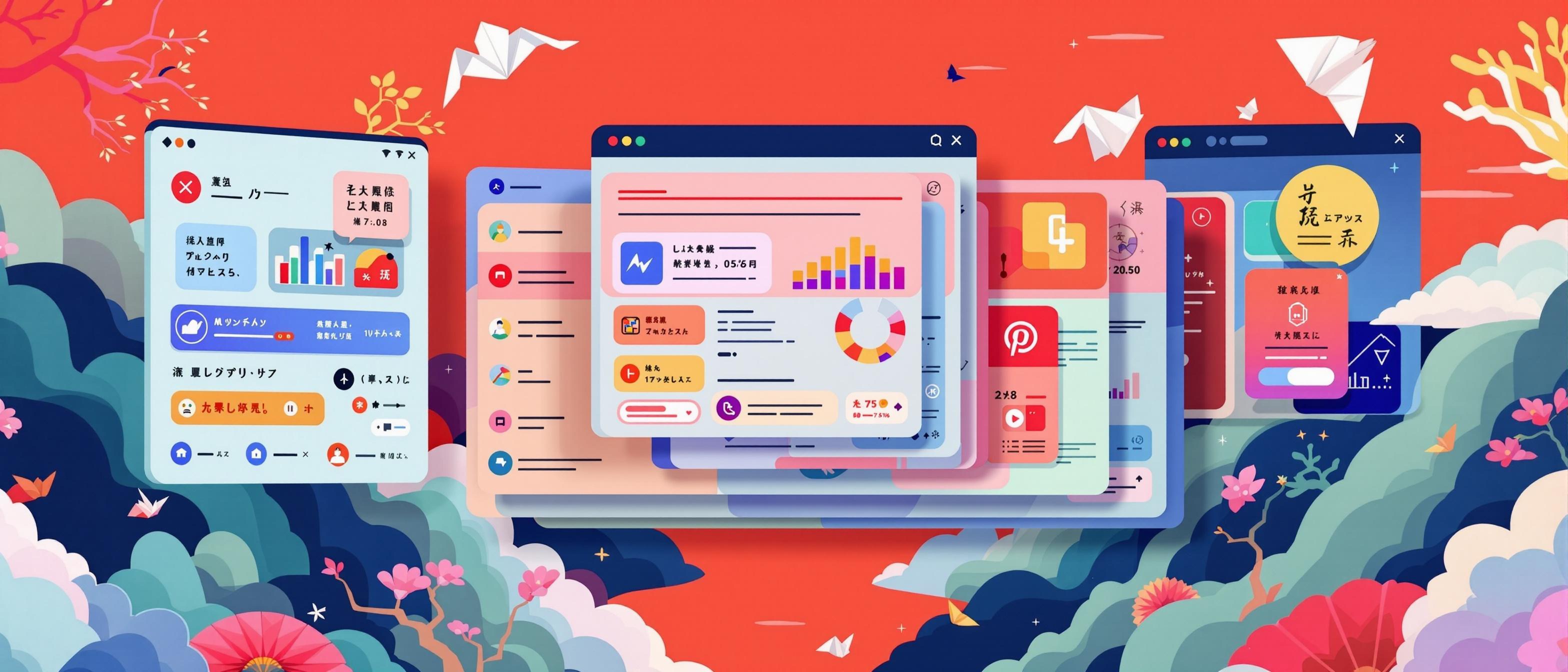
Japan’s writing system is complex, involving kanji, hiragana, katakana, and often Latin characters within the same UI. Poor font rendering, character set compatibility issues, or truncation can degrade user experience.
Technical teams must ensure applications support multi-byte Unicode (UTF-8) and handle nuances such as vertical text and ruby annotations (furigana) in documentation or educational content. Failure to do so may result in text overflow, loss of meaning, or even software errors.
Testing includes:
– Validating input fields for both full-width and half-width characters
– Auditing forms, notifications, and dialogs for accurate display and alignment
– Ensuring all system messages, searches, and sorting logic accommodate Japanese language rules
Optimizing for Mobile Usage
Japan boasts one of the world’s highest rates of mobile internet usage, with consumers routinely accessing SaaS products on their smartphones. Mobile-first design is not optional for SaaS providers targeting Japan.
A seamless mobile experience requires responsive layouts, touch-optimized controls, and efficient performance on a diverse range of devices. Testing must account for popular local operating systems, browsers, and input methods (such as flick keyboard input for kana).
Strategic mobile optimization includes:
– Adaptive UIs that scale gracefully from large screens to compact mobile devices
– Streamlined workflows requiring minimal typing or scrolling
– Localization of push notifications and SMS alerts, fully compliant with Japanese communication conventions
By addressing these in your UI/UX localization plan, you set the stage for higher adoption and enhanced user loyalty in the Japanese market.
Compliance with Local Regulations
Japanese regulations governing SaaS—including data privacy, consumer protection, and electronic transactions—are rigorous and stringently enforced. Any SaaS provider seeking to localize and succeed in Japan must integrate a thorough compliance framework into their planning and operations from day one.
Understanding and adhering to these standards builds user trust, reduces legal risk, and demonstrates commitment to the Japanese market. This is not just a box-ticking exercise but a foundational aspect of sustainable growth.
Understanding the Act on Personal Information Protection (APPI)
The Act on the Protection of Personal Information (APPI) is the core data privacy law in Japan. It applies to all entities handling Japanese personal data, regardless of where they are based. Failing to comply carries both regulatory penalties and reputational damage.
APPI outlines strict requirements around data collection, storage, processing, and sharing. Companies must obtain explicit user consent for data use, provide clear privacy policies in Japanese, allow users to access or amend their data, and report breaches promptly.
To align with APPI, SaaS providers should:
1. Appoint a Local Data Controller: Ensure there is always a responsible contact point within Japan.
2. Review Vendor Contracts: Audit relationships with cloud providers or third-party vendors for APPI compliance and data sovereignty guarantees.
3. Implement Audit Trails: Maintain detailed logs of consent, access, and processing to provide transparency and accountability.
For a comparison of APPI requirements and how they relate to global frameworks like GDPR, review this deep dive on APPI vs GDPR for SaaS companies.
Adhering to Data Privacy and Security Standards
Alongside APPI, other privacy and cyber-security frameworks influence B2B buyer decisions. Large enterprises or public sector clients may expect SaaS vendors to comply with industry-specific standards like ISMS (Information Security Management Systems) or utilize domestic data centers for peace of mind.
Practical steps to satisfy Japanese expectations include:
– Localizing terms of service and privacy documentation for total transparency
– Encrypting all user data at rest and in transit, ideally with Japanese regulatory recommendations in mind
– Establishing processes for responding promptly to Japanese regulator or user information requests
Localization is incomplete without rigorous, ongoing compliance oversight—reinforcing both user safety and commercial viability.
Integrating Local Payment Methods
To enable smooth conversions and recurring revenue, SaaS providers must offer familiar payment methods aligned with Japanese norms. The payment landscape in Japan is distinctly different from North America or Europe, with a broader mix of options and unique consumer preferences.
Integrating these payment gateways reduces friction in onboarding, increases trust, and meets the operational standards expected of serious market entrants.
Popular Payment Options in Japan
Japanese businesses and consumers favor several payment methods outside standard international credit cards. Bank transfers (furikomi), convenience store payments (konbini), and local e-wallets are widely used for both single transactions and subscriptions.
For SaaS providers selling to enterprises, direct invoice and bank transfer remain the dominant modalities. In B2C and SMB segments, credit cards are popular but often supplemented by other digital payment channels.
Key payment options to support include:
1. Credit Cards (JCB, Visa, MasterCard): Still widely used, but must be processed via gateways with Japanese support and fraud measures.
2. Konbini Payments: Allow users to pay at local convenience stores for SaaS subscriptions—a cultural norm for digital payments.
3. Bank Transfers and E-money: Frequently requested by B2B clients and increasingly common for recurring payments.
Implementing Secure and Familiar Payment Gateways
Security, reliability, and a sense of familiarity are vital when handling Japanese payment data. SaaS vendors need to integrate with payment processors offering Japanese-language interfaces, local receipting, and fraud controls tailored to the Japanese market.
Best practices include:
– Partnering with domestic payment service providers that understand compliance and consumer protection locally
– Supporting tax-invoicing and official receipts in Japanese for business accounting needs
– Ensuring all transaction notifications and receipts are localized and meet Japanese regulatory standards
By integrating these options seamlessly into the purchase workflow, SaaS companies can foster user confidence and boost conversion rates.
Providing Native Language Customer Support
Localized customer support is critical for SaaS adoption and retention in Japan. Native speaking teams not only handle linguistic nuances, but also reflect Japanese social and business etiquette in their interactions. Responsive, empathetic, and culturally-appropriate support sets leading SaaS brands apart in the Japanese market.
Providing true native support means more than handling queries in Japanese. It involves aligning schedules, quality standards, and communication protocols with Japanese expectations for professionalism and courtesy.
Establishing Japanese-Speaking Support Teams
A dedicated Japanese-speaking support team is an invaluable asset for SaaS localization. These specialists should be proficient in both technical and non-technical topics and able to manage written and live interactions across channels (email, chat, phone).
Effective support teams are built by:
– Hiring or partnering with native Japanese SaaS experts, not just generalist translators
– Training support staff in product-specific workflows and common local user scenarios
– Equipping your knowledge base and FAQs with fully localized, contextually accurate content
For detailed operational strategies and insight into Japanese customer service culture, examine best practices for Japanese customer support in SaaS.
Offering Support During Local Business Hours
Japanese users expect timely and seamless support, especially during core domestic business hours (usually Monday to Friday, 9:00–18:00 JST). Missed SLAs or delayed responses in the Japanese time zone can quickly erode trust and satisfaction.
To align with local schedules:
– Structure customer support shifts or use local partners to provide real-time assistance
– Monitor and optimize first-response and resolution times in Japanese
– Use support analytics to proactively address recurring issues or trends specific to Japanese users
Providing comprehensive native language support demonstrates commitment and anchors long-term relationships in the Japanese SaaS ecosystem.
Tailoring Marketing Strategies for the Japanese Audience
Marketing SaaS in Japan demands specialized tactics tailored to both digital and offline consumption habits. Success depends on a deep understanding of the social media landscape, relationship-building with local entities, and long-term efforts to foster credibility within industry circles.
Generic, global campaigns rarely resonate. Instead, SaaS marketers must combine hyper-localized digital content with organic partnerships and active participation in relevant business communities. Localization extends through every stage of the funnel—from discovery to engagement to post-sale nurturing.
Utilizing Popular Japanese Social Media Platforms
The Japanese digital landscape is unique, with platforms like LINE, Twitter (X), and note being among the most influential. Enterprise buyers and decision-makers also frequent specialized web portals, forums, and industry associations for software recommendations.
To maximize brand and product reach:
1. Establish Official Corporate Accounts: Maintain an active, credible presence on platforms favored by your target audience.
2. Produce Localized Content and Campaigns: Tailor thought leadership, demo videos, and case studies to address Japanese challenges and aspirations.
3. Engage in Community Interaction: Participate in Q&A, host local webinars, and facilitate knowledge sharing to foster trust and reputation.
If you want to expand your SaaS brand’s authority and accelerate your marketing growth in Japan, building content partnerships with local players is a proven way to generate trust and reach.
Collaborating with Local Partners and Influencers
Partnerships are a cornerstone of SaaS market entry in Japan. Distribution alliances, joint webinars, or co-marketing with established industry partners can rapidly accelerate your brand’s credibility and reach.
Influencer collaborations, including deals with respected business leaders, consultants, or media personalities, can bring much-needed third-party validation. This is critical where corporate buyers seek reassurance from respected local authorities.
Effective collaboration involves:
– Selecting partners with both market reach and a reputation for integrity
– Structuring mutually beneficial co-marketing or training programs
– Sharing insights, resources, or UGC (user-generated content) relevant to Japanese market needs
Strategic, sustained marketing tailored to local norms is fundamental for lead generation, conversion, and continued growth in the Japanese SaaS sector.
Conclusion
Successfully localizing your SaaS product for Japan involves far more than translating your website and application screens. It requires a multidimensional approach addressing market research, language and culture, legal compliance, payment integration, and customer support—all while respecting the market’s business culture and user expectations.
Committing to these localization fundamentals enables SaaS providers to avoid common pitfalls, accelerate adoption, and build enduring customer relationships. Japanese users value reliability, trust, and seamless experience—qualities that can only be achieved through thoughtful, end-to-end adaptation. For SaaS firms seeking long-term gains in Japan, robust localization is not simply an option—it is a strategic imperative for market success.
 English
  Japanese